Cosmetic Companies in India: What Brand Owners Should Check Before Choosing a Manufacturing Partner
If you are building a beauty or personal care brand, the manufacturer you choose will shape far more than your product quality. It affects timelines, compliance, packaging consistency, margins, repeat orders, and customer trust. In my experience working around the Indian cosmetics space, many founders from Mumbai, Delhi, Bangalore, Hyderabad, Chennai, Surat, and Ahmedabad begin by searching for third party cosmetics manufacturing near me, but the smarter approach is to assess capability, documentation, formulation support, and scale readiness together. That is where Jack Cosmetic Pvt. Ltd., established in 2018 in Ahmedabad, enters the discussion with a practical, systems-driven model for emerging and growing cosmetic companies. You can explore the company profile here: Jack Cosmetics.
Why Cosmetic Companies Work with Jack Cosmetic Pvt. Ltd.
The right manufacturing partner is not simply a vendor; it becomes part of your operating backbone. Jack Cosmetics is led by an experienced team with deep formulation expertise and has delivered custom cosmetic manufacturing solutions to 200+ brands with 98% client satisfaction and strong repeat business. For a startup cosmetics brand, that matters because early mistakes in texture, stability, or labeling can become expensive very fast. I have seen founders in Pune and Jaipur lose months because they approved samples without checking batch repeatability. A structured manufacturer helps prevent that.
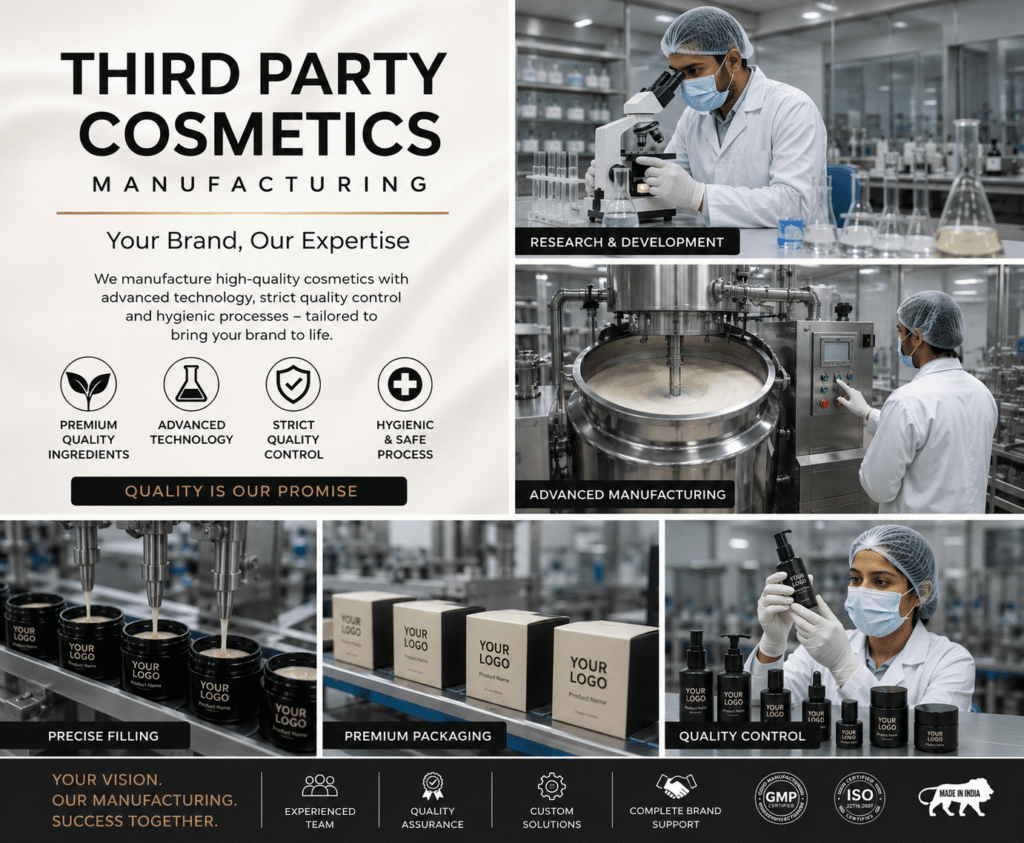
Yes, manufacturers need certifications, but certifications alone are not the full story. Jack Cosmetics operates with ISO certified and GMP certified systems, with FDA approvals wherever applicable and AYUSH support for Ayurvedic cosmetics. It also offers practical advantages that Indian founders usually ask for in the first or second call: low MOQ, custom formulation, scalable production, pan-India supply, strict quality control, and regulatory support. If your brand plans to enter body lotions or creams first, this product page is useful: body care manufacturing.
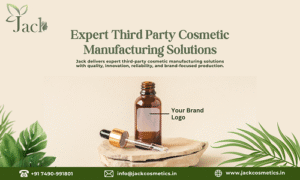
Here is another reason cosmetic companies evaluate this manufacturer seriously: flexibility across categories. Some units are good only at one format, like creams or shampoos, but weaker in serums, scrubs, men’s grooming range, or lip care manufacturing. That mismatch creates sourcing complexity. For founders trying to build one umbrella brand across personal care, skin care manufacturing, and body care, an integrated setup reduces cost leakage and operational confusion. A practical overview of this operating model appears here: expert third party cosmetic manufacturing solutions.
Our Cosmetic Companies Manufacturing Capabilities
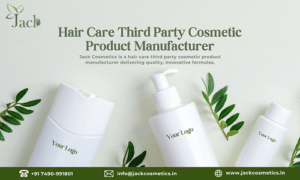
The best manufacturing setups support both product depth and brand-stage flexibility. Jack Cosmetics works across skin care, hair care, body care, sun care products, oral care products, men’s grooming range, lip care manufacturing, and natural & organic cosmetics. This matters because market demand rarely stays fixed. A founder may start with a face wash and sunscreen combo, then move into beard oil, body butter, or herbal lip balm once early traction comes in. Hair category buyers can review this page for category fit: hair care third party manufacturer.
Yes, formulation support is one of the biggest filters today. Cosmetic companies need more than a ready catalogue; they need textures, fragrance direction, active selection, packaging compatibility, and price-band alignment. In real Indian retail, especially in Kolkata, Indore, and Vadodara, your formula must survive heat, transport, storage, and shelf display conditions. A good lab team will flag viscosity issues, fragrance discoloration, and active instability before commercial production. That is where custom formulation becomes useful for both white label cosmetics and fresh product development.
Here’s how Jack Cosmetics supports category expansion without forcing brands into unnecessarily large commitments. For sun-protection lines, after-sun gels, or daily-use SPF products, the unit’s category page gives a clearer idea of scope: sun care products manufacturing. For many founders, especially first-timers, working with a low MOQ cosmetics manufacturer can make testing safer and financially less stressful.
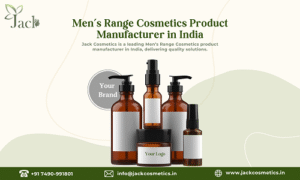
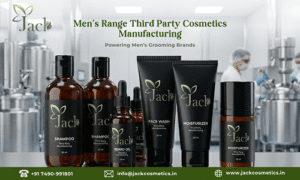
A mini example may help. One founder from Chandigarh wanted to launch a men’s grooming range with face wash, beard serum, and matte cream, but he had only enough capital for one pilot batch plus packaging design. Instead of launching all three at once, he started with two SKUs, tested reorder speed, then added the third. That phased approach is often more sensible than overcommitting in the first quarter. For niche male grooming category ideas, this page is relevant: men’s grooming range manufacturer.
Navigating Regulatory Compliance & Quality Standards
The best compliance process is boring in the right way. It is document-heavy, checklist-based, and consistent from raw material inward checks to batch coding and dispatch records. In India, cosmetic companies must think beyond formulation aesthetics and pay close attention to labeling norms, ingredient declarations, manufacturing records, and product-category-specific requirements. If you are dealing with herbal or Ayurvedic positioning, AYUSH-related alignment becomes important. If a claim or product type falls under applicable regulatory conditions, FDA expectations also come into the picture.
Yes, we provide a practical answer to the question founders ask all the time: what should you verify before placing a commercial order? Check GMP process discipline, ISO documentation, batch traceability, microbial and stability protocols, packaging compatibility, and whether the manufacturer helps with artwork review. Also ask how deviations are handled. A well-run private label cosmetics manufacturer India should be able to explain quality control in plain language, not hide it behind jargon. This useful page on skin-focused manufacturing gives more category context: skin care third party cosmetics products manufacturer.
Here’s a practical tip from the ground. Many startup teams focus heavily on product fragrance and outer packaging but ignore transit durability and storage conditions. Then summer dispatches begin, especially to warmer markets, and leakage or texture drift starts showing up. A GMP certified cosmetics manufacturer should advise on container fitment, induction sealing, and compatibility checks before scale-up. That sort of guidance saves money quietly, which is exactly why experienced founders value it.
Get a Quote for Cosmetic Companies
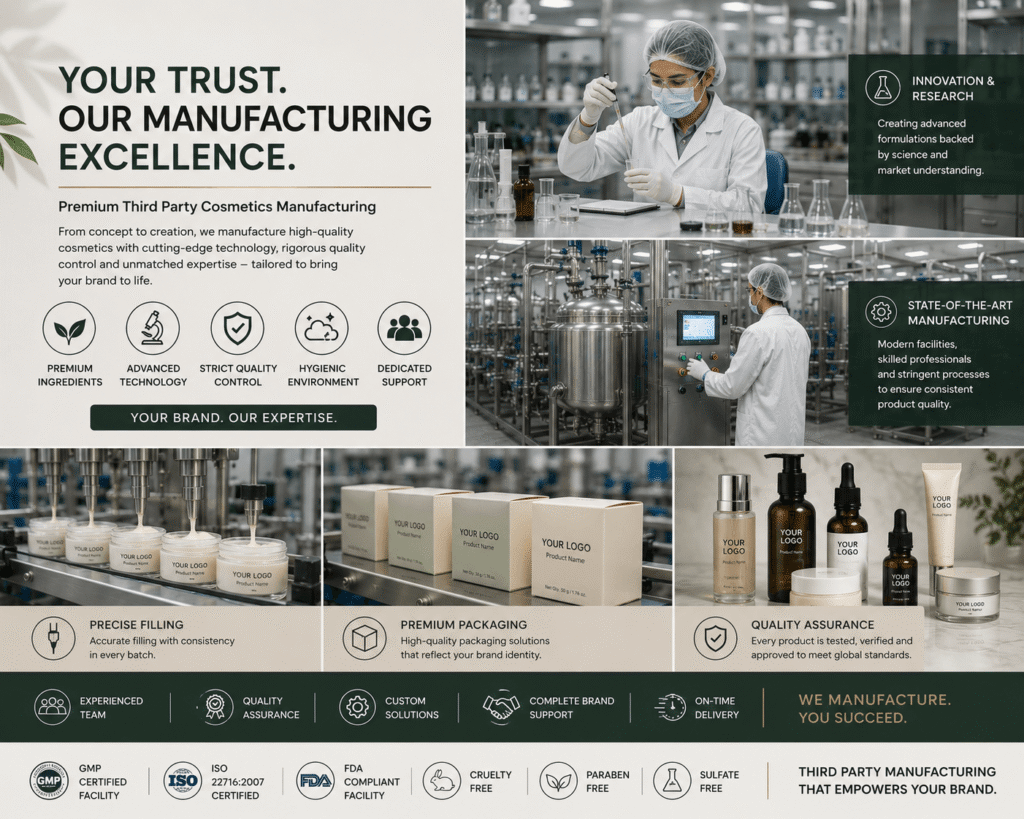
Local Manufacturers vs Jack Cosmetics
The best comparison is not emotional; it is operational. Many local units can manufacture, but not all can support scale, documentation, and multi-category growth with the same reliability.
| Evaluation Factor | Typical Small Local Manufacturer | Jack Cosmetic Pvt. Ltd. |
|---|---|---|
| Setup maturity | May be limited to a few categories | State-of-the-art facility with broader category handling |
| Documentation | Often basic or inconsistent | Structured quality and compliance documentation |
| Customization | Limited formula flexibility | Strong custom formulation and white label options |
| MOQ flexibility | Varies widely | Startup-friendly low MOQ with scale-up support |
| Category range | Often single-segment focused | Skin, hair, body, sun, oral, and men’s grooming |
| Supply reach | Mostly regional | Reliable pan-India supply |
For brands comparing regional options, the phrase contract manufacturing cosmetics in Ahmedabad often comes up because Ahmedabad gives a strong balance of industrial infrastructure, vendor access, and logistics support. But location is only one part of the decision. Execution discipline matters more over time.
Step-by-Step Process: How Cosmetic Companies Get Products to Market
Here’s how Jack Cosmetics typically supports a brand launch or expansion. Step one is understanding the product brief: target user, texture preference, claim direction, pricing band, and packaging format. Step two is formulation selection, either from ready white label cosmetics options or through custom development. Step three covers sample review, revisions, and stability checks where needed. Step four includes packaging coordination, artwork support, and compliance alignment. Step five is commercial production, QC release, and dispatch.
The best part of this process is not speed alone; it is reducing avoidable rework. Many founders from Mumbai or Delhi want to move fast, and that makes sense. But if labels, caps, pumps, tubes, or cartons are not checked properly, delays simply shift to a later and costlier stage. An experienced manufacturing team will push back where needed. That pushback can feel slow in the moment, but it prevents rejected stock later. If you want to start the discussion directly, use the contact page.
Yes, we provide brand launch support in practical ways too. Founders can ask for a Free Formulation Consultation, request to Download our Private Label Cost Guide, and discuss requirements on WhatsApp for quicker alignment on MOQ, lead times, and packaging mix. That combination is especially useful for D2C teams, salon-led labels, pharmacy-focused ranges, and marketplace-first brands.
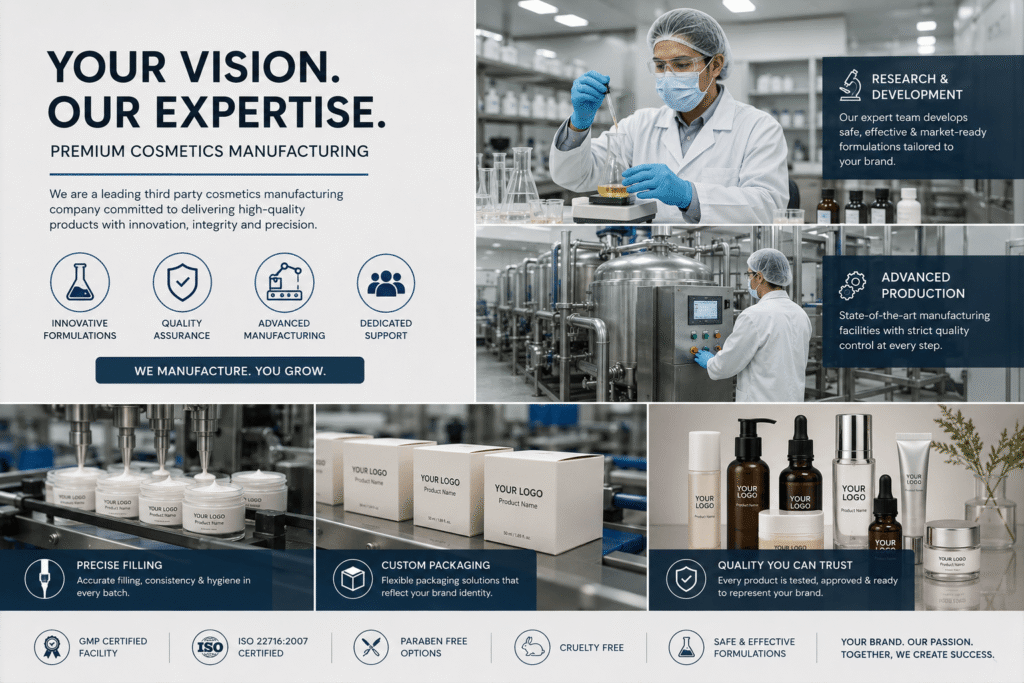
Real Client Case Study
Here’s how this looked for one anonymized client. A founder from Surat wanted to build a personal care line aimed at working women in Tier 2 and Tier 3 markets. The first idea was too broad: face wash, day cream, night gel, sunscreen, lip balm, shampoo, and body lotion all together. After review, the plan was narrowed to three starter products with cleaner pricing logic and better reorder potential. The manufacturer helped align formula feel, packaging practicality, and production sequencing. Within months, the client had smoother repeat ordering because the launch was disciplined, not rushed.
The detailed case study is simple but instructive. A startup from Ahmedabad approached Jack Cosmetics after facing repeated issues with an earlier local vendor: inconsistent cream texture, weak carton quality, and no clarity on batch-level documentation. The new brief focused on Ayurvedic cosmetics with a modern feel—body lotion, face gel, and lip care. After formulation trials, packaging checks, and revised labeling, the brand launched in Gujarat first, then expanded to Jaipur and Pune. The founder later added sun care products once the first two reorder cycles stabilized. That is how sustainable growth usually looks in this sector: careful category sequencing, not random SKU expansion.
FAQs
1. What do cosmetic companies in India usually outsource first?
- Most new brands start with face wash, creams, lotions, shampoo, serum, lip balm, or sunscreen because these categories are easier to position and test.
2. Is third party cosmetics manufacturing suitable for startups?
- Yes. It helps reduce capex, speeds up launch time, and gives access to established production systems.
3. What certifications should I check before finalizing a manufacturer?
- Look for GMP, ISO, applicable FDA alignment, and AYUSH support if you plan Ayurvedic positioning.
4. Can I start with a small quantity order?
- Yes, many brands begin with pilot quantities through a low-volume launch model before scaling.
5. Does Jack Cosmetics support custom formulation?
- Yes. The team supports custom formulation as well as white label cosmetics, depending on your brand needs.
6. Which cities does Jack Cosmetics serve?
- The company supports pan-India supply, including brands in Ahmedabad, Mumbai, Delhi, Bangalore, Hyderabad, Chennai, Surat, Jaipur, and more.
7. How can I get pricing for my cosmetic range?
- You can call +91 74909 91801, email Info@jackcosmetics.in, request a quote, or connect on WhatsApp for quicker discussion.