Steps to Launch a Sun Care Manufacturing Business: Jack Cosmetics Pvt. Ltd.
The global cosmetic industry has evolved significantly over the past decade. How To Start Sun Care Manufacturing has become an important question for many emerging beauty brands as consumer awareness, stricter regulations, and the rise of digital-first cosmetic companies continue to reshape product development and production. For new and growing brands, building a full-scale in-house manufacturing facility is no longer the only option. Instead, many businesses now partner with specialized third-party manufacturers to efficiently bring their formulations to market.
One category that continues to experience steady demand is sun care. From everyday sunscreens to protective skincare products designed for humid climates or outdoor environments, sun care formulations have become an essential part of modern beauty routines.
In markets such as India, the USA, and the UK, brand owners are increasingly exploring private-label and contract manufacturing to launch sun care products more efficiently. At the same time, exporters targeting regions like the UAE, Southeast Asia, and Europe must also consider regulatory compliance, formulation stability, and packaging compatibility.
Within this evolving landscape, Sun Care Third Party Cosmetics Product Manufacturing has emerged as a practical solution for startups, distributors, and established brands looking to expand their skincare portfolio without making heavy investments in manufacturing infrastructure.
Changing Needs of Modern Cosmetic Brands
Modern cosmetic brands operate in a competitive and fast-moving market. Product innovation cycles are shorter, consumer expectations are higher, and global distribution channels demand consistent quality.
Several key trends have influenced how cosmetic brands approach product manufacturing:
- Faster product launches: New beauty brands—especially D2C startups—need the ability to launch products quickly to remain competitive.
- Clean beauty awareness: Consumers increasingly examine ingredient lists, encouraging brands to work with manufacturers who understand evolving ingredient standards.
- Export-ready formulations: Brands planning distribution in markets like the UK, Europe, or Southeast Asia must consider ingredient regulations and labeling requirements early in the development process.
- Consistency and scalability: Brands expanding into markets such as Canada, Australia, or the Middle East must ensure that product quality remains consistent across batches.
Many Indian cosmetic startups and international importers face the same challenge: developing reliable formulations while managing compliance, packaging, and supply chain requirements simultaneously.
What Is a Sun Care Third-Party Cosmetics Product?
A Sun Care Third Party Cosmetics Product refers to a cosmetic product designed for sun care purposes that a specialized contract manufacturer manufactures on behalf of a brand owner.
Instead of producing the product internally, a cosmetic brand collaborates with an experienced manufacturer who handles:
- Formulation development
- Ingredient sourcing
- Production and filling
- Packaging compatibility
- Quality testing
- Documentation support
Common sun care cosmetic products manufactured under third-party arrangements include:
- Sunscreen lotions
- Sun protection creams
- Protective face lotions
- Sun care body lotions
- Sun care gels
- Herbal or Ayurveda-based sun care formulations
From a consumer perspective, these products appear under the brand’s label, but the formulation and production are handled by a professional cosmetic manufacturer operating under regulated production environments.
Why Brands Prefer Third-Party Manufacturing for Sun Care and Third-Party Cosmetics Products?
For many emerging brands, building a manufacturing facility involves significant capital investment, regulatory approvals, and technical expertise.
Third-party manufacturing helps address these challenges.
- Reduced Setup Cost: Setting up a cosmetic manufacturing plant requires specialized equipment, quality testing infrastructure, trained personnel, and regulatory approvals. Working with an established manufacturer eliminates these initial costs.
- Faster Go-To-Market: Brands often aim to launch products quickly to capitalize on market demand. Third-party manufacturers already have production infrastructure and standardized processes in place, which helps reduce development timelines.
- Regulatory and Manufacturing Support: Experienced cosmetic manufacturers understand documentation requirements for different markets. Brands exporting to regions like Europe or the Middle East often rely on manufacturing partners who are familiar with product safety documentation and labeling expectations.
In cosmetic manufacturing environments, these factors can significantly influence the success of a product launch.
Formulation Quality, Stability & Performance
Developing a sun care cosmetic product requires careful formulation planning. Ingredient compatibility, texture stability, and shelf life all influence the product’s reliability.
Experienced cosmetic manufacturers understand that formulation is not only about ingredient selection. It also involves maintaining a balance between:
- Active components
- Emollients and stabilizers
- Preservative systems
- Texture modifiers
- Fragrance compatibility
Consistency in texture and appearance across multiple batches is essential. A product that performs well in a laboratory sample must also maintain its stability during large-scale production.
Shelf stability testing helps ensure that the formulation remains stable throughout its intended shelf life, particularly in climates with high temperature or humidity.
Safety, Compliance & Regulatory Readiness
Safety and regulatory compliance are fundamental aspects of cosmetic manufacturing.
Brands operating in export markets often face different regulatory frameworks. While requirements vary between countries, certain principles remain common across most regions:
- Accurate ingredient declaration
- Batch traceability
- Product safety testing
- Proper labeling
For example, cosmetic products entering markets such as the UK or Europe must follow specific ingredient restrictions and labeling structures. Similarly, distributors in Gulf markets like Saudi Arabia or Qatar often expect detailed product documentation before approving imports.
Although manufacturers do not provide legal advice, experienced teams typically maintain awareness of these regulatory environments and help brands prepare documentation accordingly.
Packaging, Branding & Customization Flexibility
Packaging plays a significant role in consumer perception and product protection.
Sun care cosmetic products are often packaged in formats such as:
- Tubes
- Airless pumps
- Bottles
- Jars
- Spray containers
Manufacturers evaluate packaging compatibility with the formulation to ensure stability and avoid product degradation.
Brand owners may also request customization, such as:
- Label design integration
- Packaging color variations
- Multi-language labeling
- Market-specific packaging formats
This flexibility is particularly important for brands targeting different regions such as Southeast Asia or the Middle East, where packaging preferences may vary.
Manufacturing Technology & Quality Control
Reliable manufacturing infrastructure ensures that cosmetic products are produced consistently and safely.
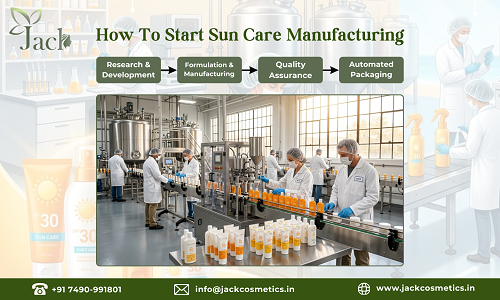
In professional cosmetic manufacturing environments, production typically includes:
- Controlled mixing systems
- Hygienic filling lines
- Batch documentation
- Equipment sanitation procedures
Quality control teams monitor each stage of the process, including raw material inspection, in-process checks, and finished product evaluation.
Batch consistency is especially important for brands selling products across multiple markets, where distributors expect identical quality in every shipment.
Scalability & Supply Chain Reliability
A common challenge for growing cosmetic brands is scaling production while maintaining quality.
Third-party manufacturers help address this challenge by offering flexible production capacity.
For example:
- Small startup brands may begin with limited production runs.
- As demand increases, the manufacturer can scale production without altering the formulation.
For export markets such as Southeast Asia or Africa, supply chain consistency becomes particularly important. Importers in countries like Nigeria or Kenya often rely on predictable shipment schedules to maintain retail availability.
Cost Efficiency for Growing Cosmetic Brands
Cost efficiency in cosmetic manufacturing is not only about the unit price of production.
Long-term efficiency comes from:
- Stable formulations that reduce product recalls
- Reliable ingredient sourcing
- Efficient production cycles
- Reduced product rework
When production processes are well managed, brands experience fewer disruptions in supply, which ultimately supports sustainable growth.
Export Readiness & International Market Acceptance
Brands planning international expansion must consider export readiness from the early stages of product development.
Export-friendly cosmetic products typically require:
- Ingredient transparency
- Stable formulations suitable for different climates
- Accurate labeling
- Consistent packaging standards
Distributors in markets such as the UAE, Malaysia, or Indonesia often evaluate supplier reliability before committing to long-term partnerships.
Buyers may also conduct supplier audits to assess manufacturing standards, hygiene protocols, and documentation practices.
Integration into Brand Business Model
Third-party cosmetic manufacturing supports multiple business models within the beauty industry.
- D2C Cosmetic Brands: Digital-first brands often focus on marketing, branding, and customer engagement while outsourcing production to experienced manufacturers.
- Distributor-Led Brands: Some cosmetic brands operate through distributor networks across different countries. In such cases, reliable manufacturing becomes essential to maintain supply consistency.
- International Expansion: Brands expanding into markets such as Australia, Canada, or Latin America benefit from manufacturing partners who can support export documentation and scalable production.
Training, Documentation & Ongoing Support
Beyond manufacturing, professional cosmetic manufacturers often assist brands with operational support.
This may include:
- Product information documentation
- Ingredient transparency
- Packaging guidance
- Production planning
For new cosmetic entrepreneurs or beauty students entering the industry, this knowledge exchange helps bridge the gap between product ideas and commercial manufacturing realities.
Why Choosing the Right Third-Party Manufacturer Matters?
Selecting the right manufacturing partner is a critical decision for cosmetic brands.
Experienced cosmetic manufacturers understand that long-term partnerships depend on several factors:
- Manufacturing experience
- Transparent communication
- Reliable production schedules
- Strong quality control systems
- Regulatory awareness
When these elements align, brand owners can focus more on marketing, distribution, and product development rather than operational challenges.
About Jack Cosmetic Pvt. Ltd
Jack Cosmetic Pvt. Ltd is an experienced third-party cosmetic manufacturer supporting beauty brands across India and international markets.
The company works with brand owners, distributors, and cosmetic entrepreneurs to develop and manufacture a wide range of cosmetic products, including Body care formulations. With a focus on production quality, documentation support, and scalable manufacturing, the company assists brands in bringing cosmetic products to market efficiently.
More information about their manufacturing capabilities and product portfolio can be found on their official website: 👉 https://www.jackcosmetics.in/
Conclusion:
The sun care category continues to grow as consumers become more conscious about daily skincare routines and environmental exposure.
For many cosmetic brands, Sun Care Third Party Cosmetics Product manufacturing offers a practical pathway to enter this category without investing in complex manufacturing infrastructure.
By working with experienced cosmetic manufacturers, brand owners can focus on product positioning, branding, and market expansion while relying on professional manufacturing systems to ensure product consistency and regulatory readiness.
For entrepreneurs, distributors, and global cosmetic traders, the right manufacturing partnership can play a vital role in building a sustainable and scalable cosmetic brand.
Key Takeaways
- Product Quality & Consistency: Professional manufacturing ensures stable formulations and reliable batch production.
- Regulatory & Safety Readiness: Compliance awareness helps brands navigate global cosmetic markets.
- Faster Market Entry: Third-party manufacturing reduces product launch timelines.
- Scalable Manufacturing: Brands can expand production as demand grows.
- Global Cosmetic Market Demand: Sun care products remain relevant across multiple international markets.
FAQs
1. What is third-party cosmetic manufacturing?
- Third-party cosmetic manufacturing refers to the process in which a specialized manufacturer produces cosmetic products on behalf of a brand owner. The brand markets and sells the product under its own label.
2. What is the typical shelf life of sun care cosmetic products?
- Shelf life varies depending on the formulation and packaging. Most cosmetic products undergo stability testing to determine a safe and reliable shelf life under normal storage conditions.
3. Can third-party manufacturers support export requirements?
- Many experienced manufacturers are familiar with documentation, labeling structures, and quality standards required for exporting cosmetic products to international markets.
4. What is the difference between private label and third-party manufacturing?
- Private label products are pre-developed formulations that brands can sell under their own label, while third-party manufacturing may involve customized formulation development for a specific brand.
5. How do cosmetic manufacturers ensure product consistency?
- Consistency is maintained through controlled manufacturing processes, standardized formulations, quality testing, and batch documentation.
#ThirdPartyCosmeticManufacturing #PrivateLabelCosmetics #CosmeticManufacturer #HaircareManufacturing #SunCareCosmeticsProduct #JackCosmetic #CosmeticExport #BeautyBrandStartup #GlobalCosmetics