High-Quality Premium Lip Care Third Party Manufacturing Partner: Jack Cosmetics Pvt. Ltd
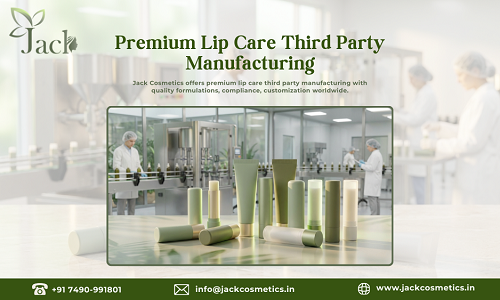
The global cosmetic industry has undergone significant transformation over the past decade, with brands now operating in a more competitive and tightly regulated environment. Across key markets such as India, the United States, and the United Kingdom, buyers increasingly expect safer formulations, transparent labeling, and faster product availability—making Premium Lip Care Third Party Manufacturing a strategic choice for brands aiming to scale efficiently while meeting evolving quality and compliance standards.
Changing Needs of Modern Cosmetic Brands (Global View)
Brands today are expected to launch faster while maintaining consistent quality. This is true for both early-stage D2C brands and established distributors.
Experienced cosmetic manufacturers understand that brands now look for:
- Faster product launches without compromising stability testing
- Clean beauty trends that require careful ingredient screening and documentation
- Export-ready formulations that can pass buyer audits
- Consistency and scalability across multiple production batches
Brands operating in export markets often face documentation and compliance gaps when expanding beyond domestic sales. Indian manufacturers, for example, support brands targeting buyers in parts of Europe or the Middle East, where labeling formats and safety dossiers are closely reviewed by distributors.
What Is a Lip Care Third-Party Cosmetics Product?
A lip care product manufactured through a third party is a cosmetic formulation produced by an external manufacturer on behalf of a brand owner.
In practical terms, this means:
- The formulation is developed, produced, and quality-checked by a manufacturing partner
- The brand owner defines positioning, packaging, and market requirements
- The finished product is supplied under the brand’s label
Consumer expectations for lip care are functional and straightforward. Users expect a comfortable texture, an acceptable fragrance, a stable appearance throughout shelf life, and packaging that protects the formulation. There is no medical promise involved—just everyday cosmetic performance that must remain consistent across batches.
Why Brands Prefer Third-Party Manufacturing for Lip Care and Third-Party Cosmetics Products?
Third-party Manufacturing helps brands reduce operational complexity.
From experience working with brand founders and procurement teams, the main reasons are practical:
- Reduced setup cost compared to building in-house facilities
- Faster go-to-market by using established manufacturing systems
- Regulatory and Manufacturing support that new brands may lack internally
For example, a startup preparing to enter parts of Southeast Asia may not have internal quality teams to manage stability testing and export documentation. Working with an experienced manufacturer reduces rework and shortens lead times.
Formulation Quality, Stability & Performance
In cosmetic manufacturing environments, formulation quality is defined by balance and repeatability.
Key technical considerations include:
- Ingredient balance to maintain texture and appearance
- Texture consistency so the product feels the same across batches
- Shelf stability under normal storage conditions
Experienced cosmetic manufacturers understand that performance here is about reliability, not making exaggerated cosmetic or dermatological claims. A stable lip care product should remain uniform, free from separation, and usable within its stated shelf life.
Safety, Compliance & Regulatory Readiness
Safety is a process, not a marketing statement.
Brands operating in export markets often face:
- Product safety testing requirements from buyers
- Labeling accuracy checks for ingredient declarations
- Export documentation expectations, such as MSDS and product dossiers
Global compliance awareness matters, whether products are shipped to buyers in the United Arab Emirates or distributors in parts of Canada. While manufacturers cannot provide legal advice, experienced teams help brands prepare documentation aligned with common international buyer expectations.
Packaging, Branding & Customization Flexibility
Packaging decisions affect product stability and consumer acceptance.
From a manufacturing perspective, practical packaging support includes:
- Packaging compatibility with the formulation
- Branding support for artwork placement and label layout
- Market-specific customization, such as language requirements or batch coding
This flexibility is essential for brands supplying distributors in Malaysia or Indonesia, where packaging presentation influences buyer confidence.
Manufacturing Technology & Quality Control
Manufacturing reliability is built on systems, not promises.
In professional facilities, this includes:
- Controlled production environments
- Batch-wise documentation
- Hygiene practices aligned with cosmetic manufacturing standards
Batch consistency matters because distributors and importers compare samples across shipments. Even minor variations can affect buyer trust.
Scalability & Supply Chain Reliability
Scaling from pilot batches to export volumes is a common challenge.
Reliable third-party manufacturers support:
- Small initial batches for test markets
- Bulk production for distributor-led rollouts
- Supply consistency for repeat export orders
For brands selling into parts of Africa, supply reliability is often as crucial as formulation quality. Delays or inconsistent supply can disrupt distributor relationships.
Cost Efficiency for Growing Cosmetic Brands
Cost efficiency in cosmetic Manufacturing is about reducing long-term waste.
Experienced teams focus on:
- Reduced rework through stable formulations
- Stable production planning
- Predictable quality to avoid rejected batches
This approach protects brand reputation and operational budgets without focusing on short-term price competition.
Export Readiness & International Market Acceptance
Export readiness is about meeting buyer expectations before products leave the factory.
This includes:
- Export-friendly formulations with documented ingredients
- Buyer audits that review manufacturing processes
- Distributor expectations around traceability
Brands supplying to Australia or Saudi Arabia often face additional scrutiny around documentation and quality systems.
Integration into Brand Business Model
Third-party Manufacturing fits different business models:
- D2C brands benefit from faster launches
- Distributor-led models rely on a consistent supply
- International expansion needs documentation and stable manufacturing partners
In cosmetic manufacturing environments, alignment between brand strategy and production capability reduces friction during scale-up.
Training, Documentation & Ongoing Support
Long-term manufacturing partnerships go beyond production.
Support areas include:
- Product knowledge sharing for brand and sales teams
- Documentation assistance for audits and distributors
- Ongoing manufacturing coordination as volumes grow
Experienced cosmetic manufacturers understand that informed brand teams manage markets more responsibly.
Why Choosing the Right Third-Party Manufacturer Matters?
The manufacturer becomes an operational extension of the brand.
Key considerations:
- Manufacturing experience in similar product categories
- Regulatory understanding across domestic and export markets
- Consistent support during scale-up and audits
These factors reduce operational risk and improve long-term brand stability.
About Jack Cosmetic Pvt. Ltd
Jack Cosmetic Pvt. Ltd is an experienced third-party cosmetic manufacturer serving Indian and international markets. The company supports cosmetic brands with formulation development, compliant manufacturing processes, and documentation support for domestic and export-oriented product lines. More information about their manufacturing capabilities is available at 👉 https://www.jackcosmetics.in/.
Conclusion:
The Lip Care Third-Party Cosmetics Product offers cosmetic brands a practical way to enter and scale in a consistently in-demand product category. When developed in collaboration with experienced manufacturing partners, brands benefit from stable formulations, regulatory readiness, and scalable production systems.
For brand owners and exporters, choosing the right manufacturing partner is less about speed alone and more about building a reliable foundation for long-term market participation.
Key Takeaways
- Product Quality & Consistency depend on formulation discipline and batch control.
- Regulatory & Safety Readiness supports buyer confidence
- Faster Market Entry is enabled through third-party Manufacturing
- Scalable Manufacturing supports domestic and export growth
- Global Cosmetic Market Demand requires export-aware production systems
FAQS
1. What does third-party cosmetic product Manufacturing involve?
- It involves outsourcing formulation, production, and quality control to a specialized manufacturer while the brand manages branding and market strategy.
2. How is shelf life determined for lip care products?
- Shelf life is assessed through stability testing and packaging compatibility checks under controlled storage conditions.
3. What makes a cosmetic product export-ready?
- Export readiness includes documented ingredients, safety testing records, compliant labeling, and traceability.
4. Is private label different from third-party Manufacturing?
- Private label usually offers predefined formulations, while third-party Manufacturing allows more customization of formulations and specifications.
5. How do brands prepare for buyer audits?
- By maintaining documentation, quality records, and consistent manufacturing processes that align with common distributor expectations.
#ThirdPartyCosmeticManufacturing #PrivateLabelCosmetics #CosmeticManufacturer #HaircareManufacturing #SunCareCosmeticsProduct #JackCosmetic #CosmeticExport #BeautyBrandStartup #GlobalCosmetics