End-to-End Men’s Range Third Party Cosmetics Manufacturing for Grooming Brands: Jack Cosmetics
Men’s Range Third Party Cosmetics Manufacturing has emerged as a strategic growth model as the global cosmetics industry continues to evolve rapidly. Over the past decade, brand owners have faced increasing demand for private-label products, tighter regulatory oversight, and constant pressure to differentiate in highly competitive markets. In regions such as India, the United States, and the United Kingdom, consumers expect faster product launches without any compromise on quality, safety, or compliance. For export-focused brands, these challenges are compounded by varying documentation, testing, and regulatory requirements across destination markets.
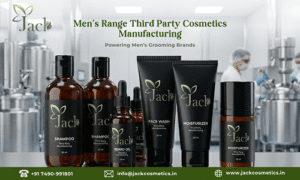
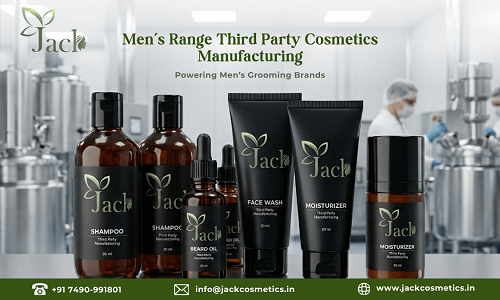
In this vibrant sector, men’s personal care products have evolved into a highly developed contract manufacturing segment. Third-party production for men’s lines lets brands introduce necessary daily-use goods—like face creams, sunscreens, shampoos, serums, body lotions, face washes, and cosmetic items inspired by herbal or Ayurvedic traditions—without the financial outlay or complex operations of running their own factory.
By partnering with seasoned third-party production partners, brands can focus on promotion, distribution, and brand development while ensuring consistent product quality, flexible production volumes, and regulatory compliance across domestic and international markets.
Evolving Requirements of Contemporary Cosmetic Companies (Worldwide View)
Today’s cosmetic businesses operate under tight schedules and shifting consumer demands.
Development trends currently emphasise:
- Quicker product rollouts to match market shifts
- Demand for clean beauty and transparent ingredient sourcing
- Formulas suitable for export that can adjust to various markets
- Uniformity and production expansion as brands mature
Firms active in foreign sales frequently encounter diverse buyer preferences. For instance, vendors in the United Arab Emirates might prioritise documentation readiness, whereas retailers in parts of Europe might focus on clear labelling and tracking. Indian manufacturers supporting both local and global brands must design workflows that manage these various operational realities.
What Constitutes a Third-Party Cosmetic Product for Men?
A Third-Party Cosmetic Product for Men is a personal care preparation crafted for routine grooming needs and produced by an external facility for a specific brand. These items are developed based on mutually agreed specifications, preferred ingredients, packaging selections, and mandatory compliance rules.
In cosmetic production settings, these products are engineered to meet routine usage goals such as cleansing, hydrating, or hair and skin maintenance. The objective is practical efficacy, storage stability, and safe use under typical conditions—without making therapeutic or medical assertions.
Why Brands Favour Contract Manufacturing for Men’s Line Third-Party Cosmetics?
Outsourcing production permits brands to enter or expand within the men’s grooming space with reduced operational risk.
Tangible business advantages include:
- Lower initial investment: Avoiding the need for internal plants, machinery, or compliance teams
- Faster market entry: Pre-existing production lines shorten development cycles
- Regulatory and production assistance: Necessary documentation and testing protocols are already established
Experienced cosmetic producers recognise that nascent brands benefit from predictable manufacturing schedules, while established brands value batch-to-batch quality consistency to sustain consumer trust.
Formulation Excellence, Stability, and Efficacy
The superiority of a formulation goes beyond just choosing ingredients—it relies on harmonisation, stability, and reproducibility.
Key formulation aspects to consider:
- Ingredient synergy: Ensuring compatibility among active agents, base materials, and preservatives
- Textural uniformity: Guaranteeing the same feel and look across different production lots
- Long-term stability: Maintaining physical and chemical integrity across the storage period
In cosmetic manufacturing settings, stability assessments and structured trials confirm that products retain their intended attributes over time, without asserting any curative benefits.
Safety, Adherence, and Regulatory Preparedness
Safety and compliance form the cornerstone of responsible cosmetic production.
Operational checkpoints involve:
- Product safety evaluation conforming to the destination market’s criteria
- Precise labelling, detailing ingredients and usage instructions
- Export paperwork necessary for customs clearance and distributor vetting
Brands targeting international sales often navigate differing documentation requirements across regions such as Southeast Asia and certain European territories. While this is informational, awareness of worldwide regulations helps manufacturers smooth market entry for brands.
Packaging, Branding, and Customisation Adaptability
Packaging serves both practical and legal functions beyond its visual appeal.
Important factors include:
- Packaging suitability for the formulas (to prevent adverse reactions)
- Branding support that aligns with the brand’s identity
- Market-specific modifications like language needs or container sizes
Seasoned manufacturers assist brands in testing packaging choices to ensure product soundness throughout storage and transit.
Production Technology and Quality Assurance
Reliability in manufacturing hinges on managed workflows and consistent sanitation methods.
Fundamental components include:
- Documentation per batch for traceability
- Standardised operational guidelines for cleanliness and contamination control
- Regular checks during the process to confirm uniformity
Within cosmetic manufacturing operations, these systems minimise corrective actions and enhance predictability for brands planning repeat production runs.
Scalability and Supply Chain Dependability
Brands seldom start with maximum export volumes. Scalability enables output to increase from small test runs to large production runs.
Scalability relies on:
- Availability of a steady supply of raw materials
- Production scheduling that accounts for peak season demand
- Dependable coordination of shipping for international buyers
Buyers in areas such as Southeast Asia and parts of Africa often evaluate a manufacturer’s capacity to handle increased order volumes without sacrificing batch consistency.
Cost Effectiveness for Expanding Cosmetic Brands
High cost efficiency in contract manufacturing stems from procedural stability rather than fleeting low prices.
Enduring value derives from:
- Less rework due to uniform processes
- Stable production scheduling
- Predictable quality that cuts down on returns and necessary reformulations
This philosophy supports sustainable growth for both direct-to-consumer (D2C) and export-focused enterprises.
Export Readiness and Global Market Acceptance
Being prepared for export demands more than simply shipping goods abroad.
Key expectations from overseas buyers include:
- Formulations that travel well with a stable shelf life
- Readiness for external inspections and facility reviews
- Paperwork that aligns with distributor needs
Brands supplying markets such as Australia or Canada frequently encounter structured quality reviews, making transparency in manufacturing crucial.
Integration into the Brand Strategy
Third-party production supports various business blueprints:
- D2C firms: Faster introductions and flexible inventory management
- Distributor-driven models: Consistent product offerings across territories
- International expansion: Growth in capacity without duplicating physical infrastructure
This adaptability frees brand teams to concentrate on marketing, sales channels, and customer engagement while manufacturing activities remain optimised.
Instruction, Paperwork, and Continuing Assistance
Beyond the manufacturing run itself, operational backup is valuable.
Ongoing support can encompass:
- Material detailing product knowledge for sales staff
- Batch records and technical files for compliance reviews
- Long-term coordination for new product versions or improvements
Skilled cosmetic manufacturers recognise that sustained partnerships reduce the time needed to onboard future product releases.
Why Selecting the Correct Contract Manufacturer is Important?
The appropriate production associate provides:
- Demonstrated manufacturing expertise
- Familiarity with regulations across different areas
- Consistent technical and procedural backing
These elements reduce operational hurdles and help brands maintain momentum as they expand geographically.
About Jack Cosmetic Pvt. Ltd
Jack Cosmetic Pvt. Ltd is an experienced contract cosmetic manufacturer supporting brands both in India and globally. The company collaborates with brand owners, distributors, and export-oriented businesses across men’s grooming and personal care product lines. Further details on their production capabilities and philosophy are available at 👉 https://www.jackcosmetics.in/
Summary
The Third-Party Cosmetic Product for Men offers a sensible route for cosmetic companies aiming for reliable manufacturing, regulatory preparedness, and scalable supply without establishing in-house production sites. For brand owners and exporters, outsourcing production enables measured expansion while allowing teams to focus on brand development and market reach. A wisely chosen manufacturing collaborator can help align product quality, paperwork readiness, and sustained operational dependability.
Core Takeaways
- Product Excellence & Uniformity: Established via controlled formulation and batch procedures
- Compliance & Safety Readiness: Paperwork and testing adapted to export mandates
- Accelerated Market Debut: Established production systems shorten launch periods
- Adaptable Production Scale: Growth potential from initial small runs to significant volumes
- Global Cosmetic Needs: Export-focused processes support international clientele
FAQs
1. What is involved in third-party cosmetic production?
- This involves a specialised manufacturer creating cosmetic items for a brand, based on agreed formulas, packaging, and compliance benchmarks.
2. How is the usability period determined for men’s grooming items?
- The shelf life is assessed through stability testing that monitors physical and chemical shifts under controlled storage settings.
3. Are products made via contract manufacturing automatically ready for export?
- Not inherently. Export readiness relies on formulation stability, accurate labelling, and documentation that meet the requirements of the destination market.
4. What differentiates private label from third-party manufacturing?
- Private label generally utilises pre-existing formulas, whereas third-party manufacturing allows greater tailoring to the brand’s specific needs.
#ThirdPartyCosmeticManufacturing #PrivateLabelCosmetics #CosmeticManufacturer #HaircareManufactufacturing #SunCareCosmeticsProduct #JackCosmetic #CosmeticExport #BeautyBrandStartup