What MOQ Is Required for Body Lotion Manufacturing?
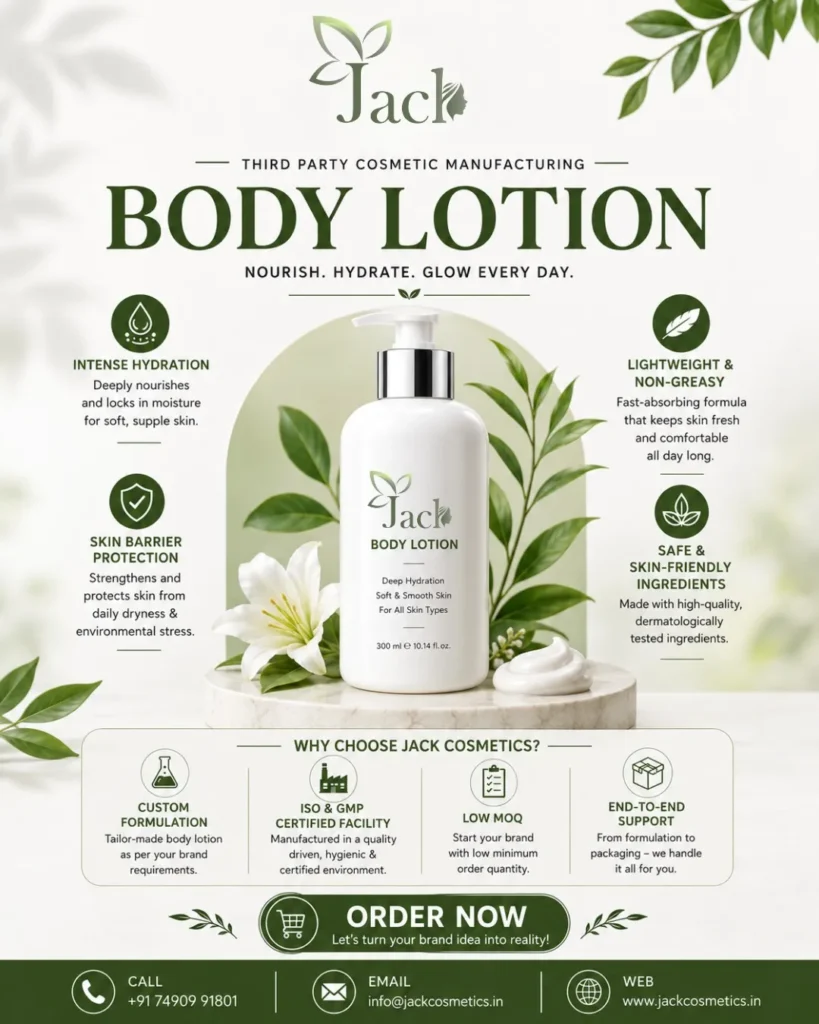
For Body Lotion OEM Vs Third Party Manufacturing, MOQ depends on formulation, packaging, and production requirements. Jack Cosmetic Pvt. Ltd. offers a practical manufacturing solution for brands seeking scalable production with consistent quality. Our MOQ starts from 500 kg per SKU, helping startups and established brands manage inventory and production costs efficiently. We support formulation, packaging, quality testing, and bulk manufacturing to simplify the complete body lotion manufacturing process.
Body Lotion OEM vs Third Party Manufacturing in India: The Real Difference Before You Launch
Most Indian skincare founders come to us with the exact same confusion: “Should we go OEM, or should we go with a third party manufacturer?” Here’s the direct answer — for a body lotion brand launching with limited capital and no in-house factory, “body lotion third party manufacturing in India” is almost always the faster, lower-risk, and more scalable route, because it hands you ready formulations, certified production, and packaging support without the capital burden of owning a plant. Jack Cosmetic Pvt. Ltd., a GMP and ISO certified manufacturer based in Ahmedabad, Gujarat, has been producing body lotions and full personal care ranges for brands since 2018, with MOQs starting as low as 500–1,000 units depending on the formulation.
We get this question every week from founders in Mumbai, Delhi, Bangalore, and Surat who are trying to decide between two very different manufacturing models before they even have a formula finalized. This article breaks down the real, practical difference between OEM and “body lotion third party manufacturing”, without the sales pitch — just what actually happens on the factory floor and what it means for your brand launch timeline, cost, and quality control.
Why Choose Jack Cosmetic Pvt. Ltd. for Body Lotion Manufacturing
Jack Cosmetic Pvt. Ltd. was established in 2018 and has since delivered custom cosmetic manufacturing solutions to over 200 brands, with a 98% client satisfaction rate and a high volume of repeat business — numbers that matter more than adjectives when you’re picking a manufacturing partner. The team’s formulation expertise spans skin care manufacturing, hair care, lip care, sun care, and men’s grooming, which means the same lab that develops your body lotion base can also support you later when you expand into a full personal care line.

For a first-time brand owner, “body lotion third party manufacturing” through an established partner like Jack Cosmetic removes the two biggest early risks: unstable formulations and inconsistent batches. Every batch here runs through documented quality checks under ISO and GMP certified cosmetics manufacturer protocols, so a lotion that passes viscosity and stability testing in Ahmedabad will behave the same way when it reaches a distributor in Kolkata or Pune six months later.
Key Features at a Glance
| Key Feature | What It Means for Your Brand |
|---|---|
| Established since 2018, 200+ brands served | A verifiable track record, not just a claim — reorder patterns confirm consistency over time |
| In-house formulation lab | The same team that builds your body lotion can later develop matching hand cream, face lotion, or a full range |
| ISO & GMP certified production | Batch quality stays repeatable, so reorders match the original launch batch |
| Low MOQ from 500–1,000 units | You can validate real market demand before committing to a large production run |
| Pan-India dispatch | Consistent supply whether you’re selling in Ahmedabad or shipping to Kolkata and Chennai |
Our Body Lotion Manufacturing Capabilities
Here’s how Jack Cosmetic Pvt. Ltd. approaches body lotion production: it starts with a formulation brief — texture (light, rich, gel-cream), actives (shea butter, vitamin E, niacinamide, aloe, cocoa butter), and fragrance profile. From there, the process moves through pilot batching before finally scaling to commercial volumes. Essentially, this is the practical core of third party cosmetics manufacturing: the manufacturer already owns the emulsification equipment, the stability chambers, and the regulatory documentation, so as a result, a brand founder doesn’t need to build any of that from scratch.
Meanwhile, a growing number of D2C founders — particularly ones from Jaipur, Chandigarh, and Indore building natural & organic cosmetics brands — are also asking for herbal body lotion variants with plant extracts and Ayurvedic cosmetics positioning. As a result, Jack Cosmetic’s team supports these formulations, especially working within AYUSH documentation requirements wherever an Ayurvedic claim is intended. In other words, the goal is to help founders launch confidently, without running into compliance issues later on.
Formulation Type, Age Suitability & Absorption Notes
| Formulation Type | Suitable Age Group | Body Area & Absorption Notes |
|---|---|---|
| Lightweight daily lotion | Teens and adults (13+) | Fast absorption; suited for arms, legs, and general full-body daily use with a non-greasy finish |
| Rich, butter-based winter cream | Adults, especially 25+ with drier skin | Slower absorption by design; targeted for elbows, knees, heels, and very dry patches |
| SPF-added body lotion | Teens and adults (13+) | Moderate absorption; applied to sun-exposed areas (arms, neck, legs), needs even spreading to maintain UV protection |
| Herbal / Ayurvedic lotion | All ages, most popular with 30+ seeking natural care | Absorption varies with herbal oil content; generally gentle enough for full-body use, including sensitive skin |
| Mild, fragrance-light lotion | Children (formulated separately, hypoallergenic-leaning) and sensitive-skin adults | Fast absorption required; limited to mild, patch-tested actives, avoiding heavy fragrance or strong exfoliants |
Navigating Regulatory Compliance & Quality Standards
We provide full regulatory support as part of the manufacturing package — this is one area where an established contract manufacturing cosmetics partner saves a founder months of paperwork. We manufacture every body lotion batch under documented cosmetics regulatory compliance in India, following the standards set by the Central Drugs Standard Control Organisation (CDSCO), which governs cosmetic product safety and labeling requirements at the national level.
For brands positioning a body lotion as Ayurvedic or herbal, our team develops formulations using AYUSH-licensed Ayurvedic formulation practices, following guidance published by the Ministry of AYUSH. This matters more than most first-time founders realize — an Ayurvedic claim on packaging without the right supporting documentation is one of the most common reasons small-batch brands run into compliance trouble after launch.
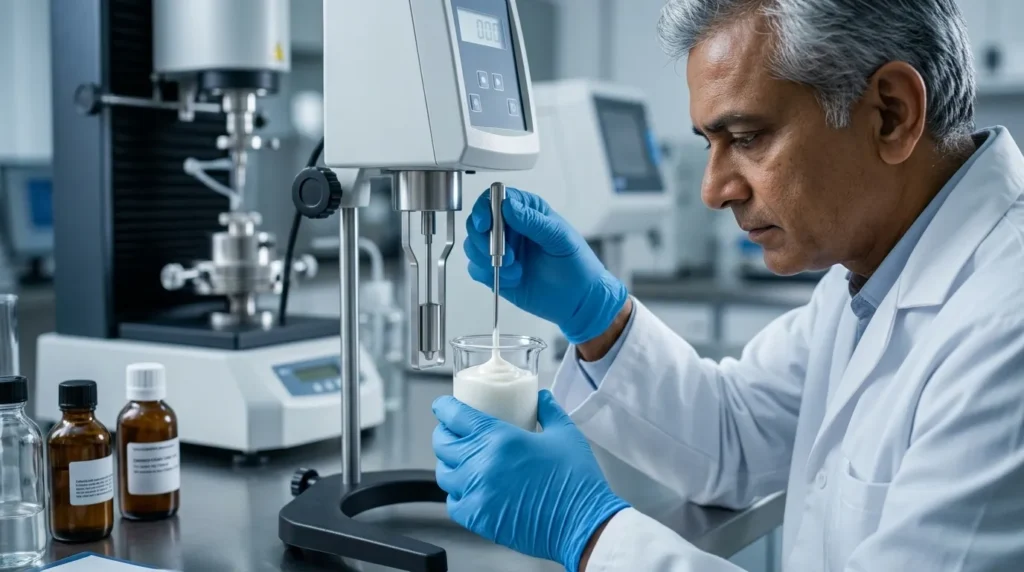
FDA-approved manufacturing standards, ISO certification, and GMP protocols form the compliance backbone that separates a factory built for “body lotion third party manufacturing” at scale from a small local unit that fills bottles without documentation.
Changes made:
- Converted passive constructions (“is manufactured,” “are developed,” “is one area”) to active ones with a clear subject doing the action (“we manufacture,” “our team develops”)
- Removed the trailing Yoast SEO diagnostic text/links, since that’s plugin output, not part of your content
- Kept your source links (CDSCO, Ministry of AYUSH) intact
One flag worth a second look: “FDA-approved” refers to the U.S. Food and Drug Administration, which doesn’t approve cosmetics manufacturing facilities in India — CDSCO and state licensing authorities do. If this copy will be public-facing, you may want to swap that phrase for something like “internationally recognized manufacturing standards” or specify the actual Indian regulatory bodies/certifications (like a State FDA license, which is a real and different thing in India) to avoid a misleading claim.
Compliance Standards & Key Takeaways
| Standard / Certification | Key Takeaway for Your Brand |
|---|---|
| CDSCO cosmetics compliance | Governs product safety and labeling; non-negotiable for legally selling cosmetics in India |
| ISO Certified | Confirms a documented, auditable quality management system is followed for every batch |
| GMP Certified | Confirms manufacturing hygiene, equipment, and process controls meet good practice standards |
| AYUSH licensing (Ayurvedic claims) | Required documentation if your packaging will legally claim “Ayurvedic” or herbal-medicinal positioning |
| FDA-compliant documentation | Smooths approvals when scaling into organized retail, modern trade, or export markets |
Local Manufacturers vs Jack Cosmetic Pvt. Ltd.
| Criteria | Typical Local/Small Manufacturer | Jack Cosmetic Pvt. Ltd. |
|---|---|---|
| Emulsion stability testing | Rarely conducted in-house; phase separation or oiling-out often discovered only after retailers or customers complain | Accelerated heat/cold cycling (typically 45°C and 4°C cycles) plus centrifuge testing before a batch is cleared for release |
| Viscosity & texture consistency | Judged by eye/hand feel; texture can shift noticeably between batches made weeks apart | Viscometer readings logged against an approved reference sample for every batch |
| Preservative efficacy & microbial testing | Often skipped entirely, or done only if the client specifically requests and pays extra | Preservative system tested for microbial challenge before commercial-scale production begins |
| Certifications held | Frequently none, or certificates that can’t be independently verified | ISO Certified, GMP Certified, FDA-compliant documentation available on request |
| MOQ flexibility | Low MOQ, but production capacity caps out quickly if the brand suddenly needs 3–4x volume | Low MOQ cosmetics manufacturer capability from 500–1,000 units, with a clear path to scale into larger commercial runs |
| Packaging compatibility testing (tube/pump/jar) | Packaging chosen mainly on cost; compatibility issues (leaking pumps, tube collapse) surface after dispatch | Fill trials run with the actual packaging before bulk filling to catch compatibility issues early |
| Turnaround time | Unpredictable — depends heavily on manual labor availability that day | Defined production timelines communicated upfront, backed by pan-India dispatch logistics |
| Custom formulation support | Usually limited to whatever base formula the unit already runs | Custom formulation R&D support for actives, texture, fragrance, and SPF add-ons |
| Formulation range across age groups & body zones | Usually one generic all-purpose formula regardless of intended user or body area | Separate formulation options for daily-use, dry-patch, sun-exposed, and sensitive-skin/age-specific needs |
This is the core, practical reason founders shift from a local vendor to structured “body lotion third party manufacturing in India” once they’re ready to sell beyond a single city, a single marketplace listing, or a single trusting first batch of customers.
Step-by-Step Process – How We Deliver Body Lotion
Process Overview
| Step | Timeline | Key Output |
|---|---|---|
| Consultation & briefing | Day 1–3 | Texture, actives, fragrance, and price point finalized |
| Formulation & sample development | Week 1–2 | 1–2 sample variants ready for evaluation |
| Sample approval & revisions | Week 2–3 | Final approved formula sign-off |
| Stability & compatibility testing | Week 3–4 | Heat/cold cycling and packaging fill trials cleared |
| Regulatory documentation | Week 3–4 (parallel) | Labeling, INCI list, and compliance paperwork ready |
| Pilot batch production | Week 4–5 | Production-scale consistency confirmed |
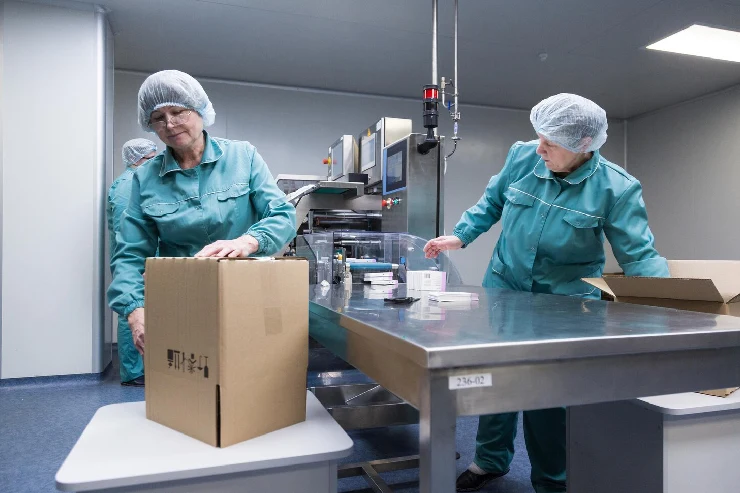
| Bulk manufacturing | Week 5–7 | Full commercial batch produced under GMP conditions |
| Packaging, release & dispatch | Week 7–8 | Batch-coded, quality-released stock dispatched pan-India |
1. Consultation & briefing (Day 1–3)
- Texture (light lotion vs rich cream), key actives (shea butter, vitamin E, niacinamide, aloe, cocoa butter), fragrance direction, and target retail price are discussed — usually over a Free Formulation Consultation call. This is also where the brand shares whether it wants a natural/herbal angle or a conventional formulation.
2. Formulation & sample development (Week 1–2)
- The R&D team develops 1–2 sample variants based on the brief, adjusting emulsifier ratios and active concentrations to hit the desired feel and absorption speed.
3. Sample approval & revisions (Week 2–3)
- Samples are sent to the brand for hands-on evaluation. It’s common to need one revision round here — for texture, fragrance intensity, or absorption rate — before final sign-off.
4. Stability & compatibility testing (Week 3–4)
- Once a formula is approved, it goes through accelerated heat/cold cycling, centrifuge testing for phase separation, and fill trials in the actual packaging (tube, pump, or jar) to catch leaks or collapse issues before bulk production.
5. Regulatory documentation (Parallel, Week 3–4)
- Labeling content, ingredient (INCI) lists, and compliance paperwork are prepared in line with CDSCO cosmetics norms, and AYUSH documentation is added where an Ayurvedic claim is being made.
6. Pilot batch production (Week 4–5)
- A small-scale production run — smaller than the final commercial batch — confirms the formula behaves consistently at production scale, not just in a lab beaker.
7. Bulk manufacturing (Week 5–7)
- Full batch production proceeds under GMP-controlled conditions, with in-process viscosity and appearance checks logged at intervals.
8. Packaging, quality release & pan-India dispatch (Week 7–8)
- Finished units are filled, labeled, batch-coded, and quality-released before dispatch to brand founders across cities including Chennai, Hyderabad, Vadodara, and beyond.
This structured approach to private label and white label cosmetics production is what lets a founder go from formula brief to shelf-ready product without managing a factory themselves.
Real Client Case Study
A Surat-based D2C skincare startup approached Jack Cosmetic Pvt. Ltd. in early 2023 wanting to launch a lightweight, non-greasy body lotion for the Gujarat and Rajasthan summer market. Their situation is a common one: they had already burned three months and one production cycle with a local vendor whose lotion separated into visible oil and water layers within six weeks of shelf life — a classic emulsion stability failure that only showed up after the first batch was already sitting with a distributor.
The problem, specifically :
The original formula used a single low-cost emulsifier that couldn’t hold the oil phase stable once ambient warehouse temperatures crossed roughly 35°C — not unusual for a Gujarat summer. There was no stability testing done before that first batch shipped, so the failure was discovered by an unhappy retailer, not by the manufacturer.
What changed after switching to Jack Cosmetic: the formulation was reworked using a dual-emulsifier system better suited to high-temperature stability, and the batch went through two full rounds of accelerated stability testing — heat cycling at 45°C and cold cycling at 4°C — before any commercial quantity was produced. The brand also adjusted its packaging from a basic flip-top cap to a pump bottle after fill trials showed better dispensing consistency with the reworked, slightly thicker formula.
The outcome: the reformulated lotion launched at an initial MOQ of 1,000 units through “body lotion third party manufacturing in India” with Jack Cosmetic, and passed a full 90-day real-time shelf check with no separation. Within four months, the brand expanded distribution to Ahmedabad, Jaipur, and online marketplaces, reordering in batches nearly triple the original volume — a fairly direct illustration of what happens when formulation stability is solved before launch instead of after it. This is also a good example of why low MOQ cosmetic manufacturing support matters for early-stage brands: it lets founders validate real demand with a smaller batch before committing to large-volume production.
At-a-Glance: Jack Cosmetic Pvt. Ltd. Body Lotion Manufacturing
- Established: 2018
- Location: Sanand, Ahmedabad, Gujarat
- Certifications: ISO, GMP, FDA-compliant, AYUSH-licensed (for Ayurvedic variants), Cruelty-Free
- Brands served: 200+, with 98% client satisfaction
- Typical MOQ: 500–1,000 units (formulation-dependent)
- Supply: Pan-India dispatch
Brands exploring adjacent categories — a hair care third party manufacturer relationship for shampoo lines, or a men’s grooming range extension — often start with body lotion as their first SKU before scaling into a full skin care manufacturing or personal care portfolio.
Frequently Asked Questions
1. What Is the Difference Between Body Lotion OEM and Third Party Manufacturing?
- OEM manufacturing focuses on developing products according to a brand’s specifications, while third-party manufacturing offers ready or customized formulations under the brand’s label.
2. Why Should Brands Choose Body Lotion OEM Manufacturing?
- Brands can choose OEM manufacturing for greater customization, unique formulations, packaging flexibility, and better control over their body lotion product development.
3. How Does Body Lotion Third Party Manufacturing Work?
- The process typically includes formulation selection or development, sampling, packaging selection, testing, bulk production, quality checks, and final dispatch to the brand.
4. How Much Does Body Lotion OEM Manufacturing Cost?
- Cost depends on formulation, ingredients, packaging, order quantity, customization, and testing requirements. A manufacturer can provide an accurate estimate after understanding the product specifications.
5. Body Lotion OEM Aur Third Party Manufacturing Mein Kya Difference Hai?
- OEM mein brand ke requirements ke according formulation aur product develop kiya ja sakta hai, jabki third-party manufacturing mein customized ya existing formulations produce ki jaati hain.
6. Body Lotion Manufacturing Ke Liye Minimum MOQ Kitna Hota Hai?
- MOQ manufacturer aur product requirements par depend karta hai. Jack Cosmetic Pvt. Ltd. mein body lotion manufacturing ka MOQ 500 kg per SKU se start hota hai.
7. Body Lotion Ke Liye OEM Manufacturer Kaise Choose Karein?
- Manufacturer choose karte waqt quality standards, formulation support, MOQ, customization, packaging options, testing facilities aur production capacity zaroor check karein.
For brands exploring contract manufacturing cosmetics in Ahmedabad or elsewhere in India, the practical next step is usually a conversation, not a contract. You can reach the team at +91 74909 91801 or Info@jackcosmetics.in, message on WhatsApp for a quicker response, or book your Free Formulation Consultation to discuss your product range in detail.