Must-Know Features of Third Party Cosmetic Manufacturing: Jack Cosmetic Pvt. Ltd
Introduction
The global cosmetic industry has evolved rapidly with the growth of private-label brands, D2C startups, and cross-border eCommerce. This shift has increased reliance on a reliable third-party cosmetic manufacturer to manage production efficiently. In markets like India, the USA, and the UK, brands must balance innovation with strict regulatory requirements while standing out in competitive spaces. Key features for successful third-party cosmetic manufacturing include consistent formulation quality, regulatory awareness, scalable production, and packaging flexibility—areas where experienced companies like Jack Cosmetic Pvt. Ltd provides structured manufacturing support.
Products such as face creams, sunscreens, shampoos, serums, body lotions, face washes, herbal cosmetics, and Ayurveda-based formulations are now widely produced through third-party manufacturing models. This approach allows brands to focus on marketing, branding, and distribution while leveraging manufacturing expertise.
Changing Needs of Modern Cosmetic Brands (Global View)
Contemporary beauty corporations are moving beyond slow product introduction timelines. They require swifter releases, adaptable manufacturing, and the agility to pivot based on shifting consumer preferences.
Clean beauty standards, ingredient clarity, and environmentally sound containers are now fundamental expectations, particularly in realms such as Europe and Australia. Concurrently, businesses shipping to territories like the UAE and Southeast Asia often necessitate formulas that remain stable in varied climates and adhere to local stipulations.
Firms engaged in international sales frequently encounter hurdles such as uneven product quality, lagging manufacturing schedules, and regulatory discrepancies. This is precisely where seasoned production collaborators become vital.
Defining a Third Party Cosmetic Manufacturer
A Third Party Cosmetic Manufacturer is an enterprise that develops, formulates, and manufactures beauty merchandise on behalf of an independent brand. The brand retains ownership of the product’s identity, while the producer manages the creation, assessment, and boxing.
Within the cosmetic production sphere, this structure is widely adopted by both nascent and established enterprises. It empowers businesses to bypass the establishment of their own production facilities while retaining command over marketing and product positioning.
These producers typically handle items spanning skincare, hair treatment, and personal hygiene goods, utilizing either standard or bespoke recipes.
Rationales for Brands Choosing Contract Production
Numerous pragmatic drivers lead brands to opt for outsourced manufacturing:
- Lower initial outlay: Eliminating capital needed for machinery, facilities, or official consent.
- Accelerated launch cycle: Pre-vetted recipes and streamlined workflows hasten product introduction.
- Regulatory aid: Producers assist with paperwork and adherence mandates.
For instance, a new venture aiming to release a botanical facial cleanser in India might partner with a manufacturer rather than establishing its own plant. Likewise, an exporter targeting the UK market can lean on a producer knowledgeable about global benchmarks.
Formulation Excellence, Durability & Efficacy
The formula sits at the heart of any beauty item. Experienced cosmetic manufacturers grasp that the precise mix of components dictates the product’s longevity and usability.
Crucial aspects include:
- Uniform consistency across production runs
- Endurance despite fluctuating heat and moisture
- Inter-compatibility of active agents and base materials
In cosmetic production settings, stability assessments confirm that products retain their intended traits through their stated lifespan. This is especially pertinent for international shipments where storage and transit conditions fluctuate.
Safety, Adherence & Regulatory Preparedness
Safety is an absolute requirement in cosmetic creation. Every item must pass suitable evaluations to affirm it meets quality and hazard benchmarks.
Key considerations encompass:
- Precise detailing of components
- Tracking of each production lot
- Durability and hazard assessments
Brands active in territories like the USA and Europe must also satisfy more stringent documentation demands. While manufacturers abstain from offering legal counsel, they support brands in compiling the necessary compliance paperwork and product files.
Outer Casing, Branding & Adaptability
The exterior container is pivotal for both safeguarding the contents and conveying the brand’s image. A dependable producer ensures harmony between the formula and the materials used for casing.
Customization possibilities might encompass:
- Varieties of bottles, dispensers, and tubes
- Assistance with label concepts
- Modifications to packaging specific to a target locale
For example, items destined for damp locales like Southeast Asia may necessitate different casings compared to those sold in arid climates.
Production Methods & Oversight
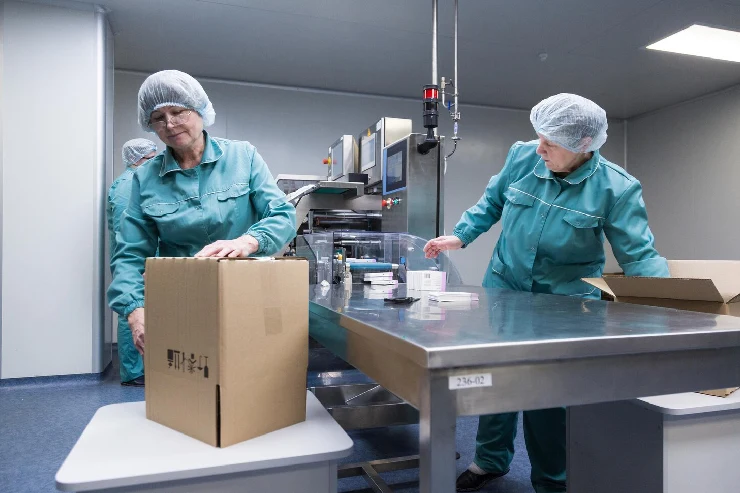
Manufacturing dependability hinges on uniform methods and controlled settings.
In properly managed premises:
- Equipment undergoes routine calibration
- Hygiene mandates are strictly followed
- Every unit is monitored for uniformity
Seasoned cosmetic producers recognize that even minor shifts in procedure variables can affect the final item quality. Consequently, quality oversight systems are embedded throughout every manufacturing phase.
Expansion Capability & Supply Chain Steadiness
A primary benefit of engaging a Third Party Cosmetic Manufacturer is the potential for expansion.
Brands can commence with modest quantities and progressively boost output as demand surges. This is notably advantageous for direct-to-consumer entities testing novel merchandise.
Reliable supply chains also guarantee:
- Prompt access to raw inputs
- Consistent manufacturing schedules
- Lowered probability of stock depletion
This becomes crucial for exporters supplying markets such as Canada or the Middle East, where delays can strain relationships with distributors.
For more insights on cosmetic manufacturing trends and brand strategies, explore discussions on Tumblr.
Economic Advantages for Developing Beauty Firms
Cost-effectiveness in contract manufacturing is rooted in sustained operational stability, not merely per-unit pricing.
Advantages feature:
- Diminished need for corrections due to consistent output
- Foreseeable production timetables
- Reduced exposure to product withdrawal expenses
Skilled cosmetic producers understand that maintaining uniformity assists brands in avoiding indirect costs associated with product failures.
Export Readiness & Global Market Approval
Merchandise prepared for export must satisfy various criteria beyond fundamental quality.
These involve:
- Required documentation for international purchasers
- Endurance during diverse shipping circumstances
- Conformity with destination market regulations
Brands sending goods to areas like Saudi Arabia or Singapore frequently undergo buyer assessments. Producers provide support by maintaining meticulous records and ensuring transparency in the manufacturing process.
Integration into a Brand’s Corporate Structure
Outsourced manufacturing integrates smoothly across diverse organizational blueprints:
- D2C entities: Concentrating on promotion while externalizing creation
- Distribution-centric models: Sustaining uniform supply across geographical zones
- Export operations: Adjusting output volume based on global requirements
This versatility enables brand expansion without being hampered by production limitations.
Training, Documentation & Ongoing Support
A strong manufacturing partner does more than produce goods.
They provide:
- Product knowledge support
- Documentation assistance
- Guidance on handling and storage
In cosmetic manufacturing environments, ongoing communication between brand and manufacturer ensures better alignment and fewer operational issues.
Why Choosing the Right Third-Party Manufacturer Matters
Selecting the right partner is a critical decision for any cosmetic brand.
Important factors include:
- Manufacturing experience
- Understanding of regulatory frameworks
- Consistency in quality and communication
Brands operating in export markets often face higher expectations, making it essential to work with manufacturers who understand global standards.
For curated beauty industry updates and cosmetic manufacturing insights, explore related content on Flipboard.
About Jack Cosmetic Pvt. Ltd
Jack Cosmetic Pvt. Ltd is an experienced third-party cosmetic manufacturer serving both Indian and international markets. The company works with a wide range of cosmetic products, including skincare, haircare, and herbal formulations.
With a focus on consistent manufacturing practices and regulatory awareness, the company supports brands in building reliable product lines.
For more details, you can explore their official website: 👉 https://www.jackcosmetics.in/
Conclusion
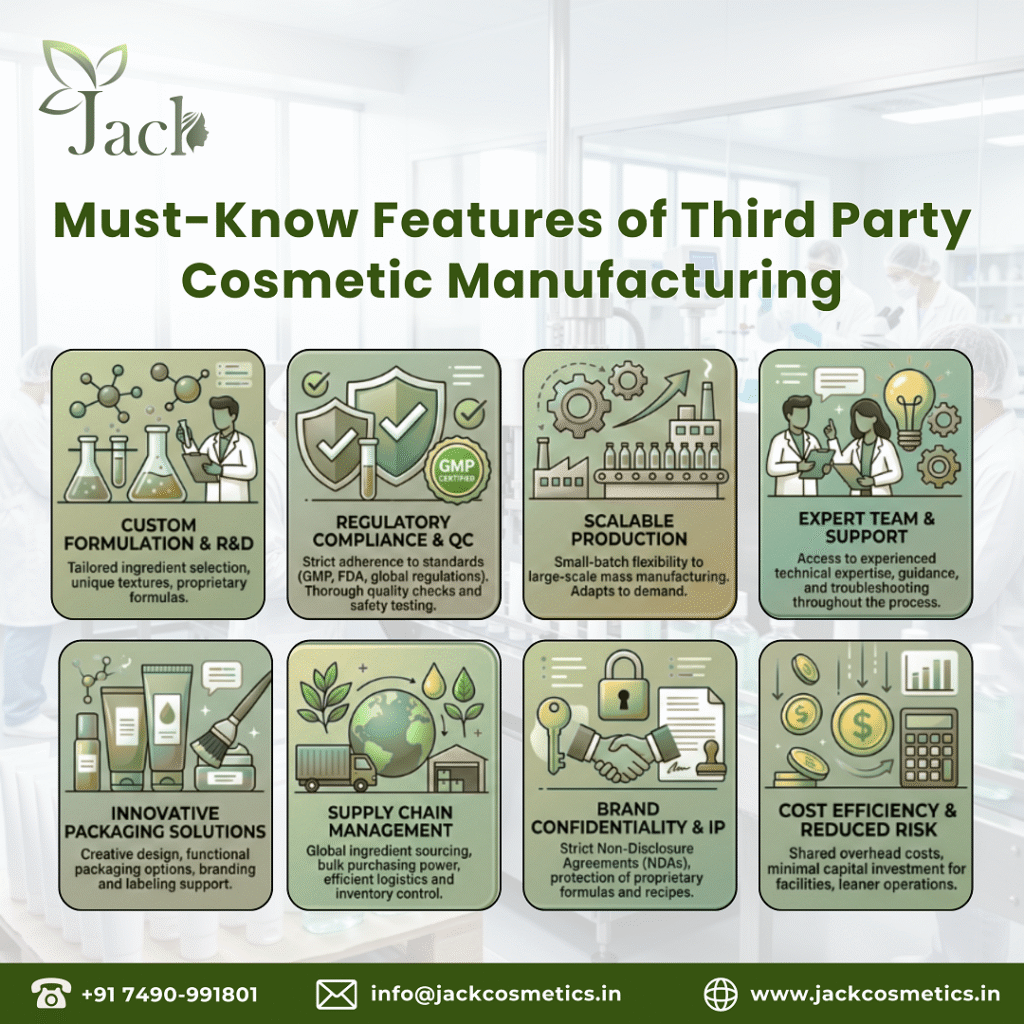
The role of a third-party cosmetic manufacturer has become increasingly important in today’s fast-evolving cosmetic industry. From formulation and compliance to scalability and export readiness, manufacturers enable brands to operate efficiently in competitive markets.
For brand owners, exporters, and product managers, choosing the right manufacturing partner is not just an operational decision—it is a strategic one that impacts long-term growth.
Key Takeaways
- Product Quality & Consistency
- Regulatory & Safety Readiness
- Faster Market Entry
- Scalable Manufacturing
- Global Cosmetic Market Demand
FAQS
1. What is a Third-Party Cosmetic Manufacturer?
- A third-party cosmetic manufacturer produces cosmetic products for brands that sell them under their own name without owning a factory.
2. Who can work with a third-party cosmetic manufacturer?
- Startups, D2C brands, distributors, exporters, and established cosmetic companies can all use third-party manufacturing services.
3. What types of products can be manufactured?
- Common products include face creams, serums, shampoos, face washes, sunscreens, body lotions, and herbal cosmetics.
4. What is the difference between private label and third-party manufacturing?
- Private label uses ready-made formulations, while third-party manufacturing allows customization in formulation, packaging, and branding.
5. How long does it take to launch a cosmetic product?
- Timelines vary, but generally, product development, testing, and production can take a few weeks to a few months.
#ThirdPartyCosmeticManufacturing #PrivateLabelCosmetics #CosmeticManufacturer #SkincareManufacturing #JackCosmetic #CosmeticExport #BeautyBrandStartup #GlobalCosmetics