India’s shampoo aisle mixes legacy FMCG names, Ayurvedic heritage labels and fast-growing digital-first brands, and “Indian” does not always mean Indian-owned. This guide lists well-known Indian shampoo brands with their parent companies, explains the difference between Indian-owned and made-in-India, and covers local, new and premium labels worth knowing. If you are thinking about launching a range of your own, the second half walks through formulation, compliance and low-MOQ production, based on our work as an Ahmedabad contract manufacturer since 2018.
Top Indian Shampoo Brands at a Glance
This is an editorial list of well-known shampoo brands sold in India, grouped by owner. It is not a ranking, and inclusion does not imply a recommendation. Ownership can change after acquisitions, so check each brand’s official website for current details.
| Brand | Parent company | Ownership | Known for |
|---|---|---|---|
| Dabur Vatika | Dabur India Ltd | Indian-owned | Herbal-positioned hair care range |
| Patanjali Kesh Kanti | Patanjali Ayurved | Indian-owned | Herbal shampoos built around ingredients such as amla and reetha |
| Himalaya | Himalaya Wellness Company | Indian-owned | Herbal and protein-based daily-care shampoos |
| Fiama | ITC Ltd | Indian-owned | Premium mass-segment shampoos from ITC’s personal care range |
| Nyle | CavinKare Group | Indian-owned | Naturals-positioned shampoo for everyday use |
| Kesh King | Emami Ltd | Indian-owned | Ayurvedic hair-fall and hair-care positioning |
| Mamaearth | Honasa Consumer Ltd | Indian-owned | Digital-first brand known for ingredient-led shampoos such as onion hair-fall shampoo |
| Forest Essentials | Forest Essentials | Indian-founded | Luxury Ayurvedic hair cleansers |
| Indulekha | Hindustan Unilever Ltd | Subsidiary of a multinational (Unilever) | Ayurvedic hair-fall and hair-care range |
| Clinic Plus | Hindustan Unilever Ltd | Subsidiary of a multinational (Unilever) | Mass-market family shampoo with a long retail presence |
| Sunsilk | Hindustan Unilever Ltd | Subsidiary of a multinational (Unilever) | Mass-market shampoo across multiple hair concerns |
| Pantene | Procter & Gamble | Multinational | Mass-premium shampoo and conditioner |
| Head & Shoulders | Procter & Gamble | Multinational | Anti-dandruff shampoo |
Most of these brands began as mass-market or Ayurvedic offerings. Newer entrants compete on ingredients, transparency and online-first distribution.
Indian-Owned vs Made-in-India: Which Shampoo Brands Are Truly Indian?
People searching for Indian shampoo brands usually mean one of three things:
- Indian-owned: the parent company is based in India (for example Dabur, ITC, Emami, CavinKare, Patanjali, Himalaya).
- Made in India: manufactured in India, but possibly owned by a foreign group (for example Sunsilk and Clinic Plus under Hindustan Unilever, or Pantene and Head & Shoulders under Procter & Gamble).
- Founded in India: started by an Indian founder, though later acquired by a larger company.
How to check on a label
Look for the “manufactured by” and “marketed by” lines, the manufacturer’s address and the licence number. A brand can be owned in one country, marketed by a second company and manufactured by a third.
Local and Regional Shampoo Brands: What to Know Before You Try One
“Local” or generic shampoo brands are usually smaller, regional labels sold through neighbourhood stores and marketplaces. Many are good products, but quality and testing vary more than they do among national brands.
A six-point safety check
- A complete ingredient list in English or Hindi.
- The manufacturer’s name and full address.
- A licence number on the pack.
- A batch number and expiry date, or a period-after-opening symbol.
- Intact, properly sealed packaging.
- A patch test on your inner forearm before first use.
If a brand cannot show these basics, treat it with caution. The same checks apply when you evaluate a manufacturer, as explained below.
New and Premium Indian Shampoo Brands
Digital-first brands
Newer Indian shampoo labels often launch online first and focus on a single concern such as hair fall, dandruff or frizz. Mamaearth is a well-known example in the ingredient-led segment.
Premium Ayurvedic and natural brands
Premium positioning usually combines Ayurvedic or botanical ingredients, smaller batches and higher price points. Forest Essentials is a widely recognised example. Retail editorials such as Nykaa’s Beauty Book also cover Kama Ayurveda, Nat Habit and Just Herbs in this space.
What makes a shampoo brand “premium”?
Typically it is a mix of formulation quality, ingredient sourcing, packaging, brand story and price tier, not just the label.
India’s Shampoo and Hair Care Market: A Quick Snapshot
Shampoo is one of the most widely used personal care categories in India, and the market has two clear layers: large multinational and domestic FMCG players that dominate mass retail, and a growing set of Ayurvedic and digital-first brands that compete on ingredients and specific hair concerns. Consumers increasingly read ingredient lists, look for sulphate-free or Ayurvedic options and buy through online marketplaces.
Who Actually Makes Shampoo in India? Brand Owners vs Contract Manufacturers
Not every brand runs its own factory. Some brand owners manufacture in-house. Others use a contract (third-party) manufacturer that formulates, produces and fills the product while the brand focuses on marketing and distribution. In India, cosmetics are regulated under the Drugs and Cosmetics Act, 1940 and the Cosmetics Rules, 2020, so a manufacturer needs the appropriate licence, and Ayurvedic products need the relevant AYUSH licensing.
What a contract manufacturer does
- Develops a custom formulation for your target customer and hair concern.
- Runs prototypes, stability tests and microbial checks.
- Produces pilot and scale batches at agreed minimum order quantities.
- Supports packaging selection and label compliance.
- Supplies finished goods to your warehouse.
For more on how this works for hair care, see our hair care third-party manufacturing service.
How to Launch Your Own Shampoo Brand in India: 5 Steps
We recently worked with a mid-sized D2C brand in Surat that wanted to launch a premium, toxin-free onion and biotin hair care range. Their path shows how a launch typically runs.
Step 1: Define your product and customer
Decide the hair concern (hair fall, dandruff, frizz, scalp care), your price tier and your claims. In the Surat project the brief was reduced hair fall, natural extracts and eco-friendly packaging.
Step 2: Custom formulation and prototyping
Our Ahmedabad lab developed three variations and tested viscosity, lather in hard water and fragrance retention. The client approved the second prototype, which balanced natural cleansing agents with conditioning.
Step 3: Compliance and packaging
We guided the client through AYUSH licensing for the Ayurvedic positioning and helped them source recyclable PET bottles for their eco-friendly ethos. Label compliance is checked before printing.
Step 4: Pilot batch at low MOQ
The brand started with a low-MOQ pilot batch to test demand in markets such as Mumbai and Delhi. Within six months they were ordering five times their initial volume.
Step 5: Quality control and pan-India supply
Every batch passed quality control and was delivered directly to the client’s fulfilment centres across India.
Shampoo types we can formulate
- Anti-dandruff and scalp-care shampoos
- Hair-fall control and strengthening shampoos
- Sulphate-free and paraben-free shampoos
- Herbal and Ayurvedic shampoos
- Volumising, smoothing and conditioning shampoos
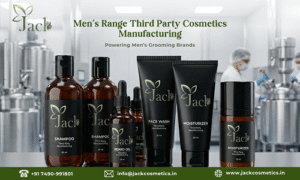
- Men’s grooming shampoos (see our men’s range manufacturing)
How to Choose a Shampoo Manufacturer: Certified Facility vs Unorganised Local Vendor
Founders in cities such as Indore and Vadodara often start with the cheapest vendor and then face stability and shelf-life problems months later. Here is how the two options typically differ.
| Feature | Unorganised local vendor | Jack Cosmetic Pvt. Ltd. |
|---|---|---|
| Formulation approach | Generic, pre-mixed bases with minor fragrance changes | Custom formulation based on your target customer |
| Licences & certifications | Often cannot show current licences or certificates | ISO and GMP certified; AYUSH-certified for Ayurvedic products; licence details on request |
| Minimum order quantity | Rigid, high volumes for little customisation | Low MOQ for startups, scalable as you grow |
| Quality control | Basic pH checks; batch-to-batch variation | Stability testing, microbial testing and batch checks |
| Delivery | Limited to a local region | Pan-India supply from Ahmedabad |
Checklist: how to verify any manufacturer
- Ask for the manufacturing licence number and the issuing authority.
- Ask for GMP or ISO certificates and confirm the issuer and validity date.
- Request stability and microbial test reports for a similar product.
- Confirm the sample and prototype policy in writing.
- Get MOQ, lead time and payment terms in the quotation.
Ready to start? Get a quote for your shampoo brand or call +91 74909 91801 to book a free formulation consultation.
Frequently Asked Questions
Which are the most popular Indian shampoo brands?
- Widely known Indian shampoo brands include Dabur Vatika, Patanjali Kesh Kanti, Himalaya, Fiama, Nyle, Kesh King, Indulekha and Mamaearth. Mass-market names such as Clinic Plus and Sunsilk are also sold everywhere in India, although they are owned by multinational groups. See the table above for each brand’s parent company.
Which shampoo brands are 100% Indian-owned?
- Brands owned by Indian companies include Dabur Vatika (Dabur), Patanjali Kesh Kanti (Patanjali), Fiama (ITC), Nyle (CavinKare), Kesh King (Emami), Himalaya and Mamaearth (Honasa Consumer). Always check a brand’s current ownership on its official website, because acquisitions change the picture.
What is the difference between an Indian brand and a made-in-India brand?
- An Indian-owned brand belongs to a company based in India. A made-in-India brand is manufactured in India but may be owned by a foreign group, such as Sunsilk and Clinic Plus (Hindustan Unilever) or Pantene and Head & Shoulders (Procter & Gamble). Both can be sold as made in India.
Are local shampoo brands safe to use?
- Many local brands are fine, but quality varies. Check for a full ingredient list, a manufacturer name and address, a batch number, an expiry or period-after-opening symbol, and a licence number on the label. Do a patch test first if you have sensitive skin.
Which Indian shampoo brands are Ayurvedic?
- Patanjali Kesh Kanti, Himalaya, Indulekha and Forest Essentials are commonly described as Ayurvedic or herbal. Ayurvedic claims should be backed by an AYUSH licence for the manufacturer, which you can ask any brand to show.
Which Indian shampoo brands are new?
- Newer Indian shampoo labels are mostly digital-first (D2C) and Ayurvedic-luxury brands, including Mamaearth and Forest Essentials in the premium-natural space. New brands launch constantly, so check each brand’s own site for its launch date and range.
What are examples of premium Indian shampoo brands?
- Forest Essentials is a well-known premium Ayurvedic brand. Other premium Indian hair care names sit in the natural and Ayurvedic segment, usually priced above mass-market shampoos.
Can I start my own shampoo brand in India with a small budget?
- Yes. A contract manufacturer can handle formulation, production and compliance support so you do not need your own factory. At Jack Cosmetic Pvt. Ltd. we offer low-MOQ pilot batches so you can test the market before scaling. The exact quantity depends on your formulation and packaging.
What is the minimum order quantity for launching a new shampoo brand?
- We offer low MOQ options designed for startup cosmetics brands. The exact quantity depends on the formulation and packaging you choose, so share your brief and we will confirm it in writing.
Can you formulate shampoos with Ayurvedic ingredients?
- Yes. We formulate Ayurvedic and herbal hair care and hold AYUSH certification for Ayurvedic products, which allows you to market them with the appropriate claims.
Do you provide pan-India delivery for manufactured goods?
- Yes. We supply across India from our facility near Ahmedabad, Gujarat, with delivery to warehouses and fulfilment centres in major cities.
How do I start the manufacturing process for my shampoo brand?
- Book a free formulation consultation by calling +91 74909 91801 or emailing Info@jackcosmetics.in. Share your target customer, hair concern, ingredient preferences and packaging ideas, and our team will propose a formulation plan.