How Does Sunscreen Third Party Manufacturing Work?
Sun care has quietly become one of the fastest-growing categories in Indian personal care, and brands of every size are asking the same question: how does sunscreen third party manufacturing actually work, from raw formulation to a finished bottle on a shelf? The process is more structured than most founders expect, and understanding each stage helps a brand avoid delays, compliance issues, and product failures before launch.
This guide walks through the entire journey — why sun care matters, how manufacturers are chosen, what products can be produced, how the production line actually functions, and how OEM compares with third-party models. It closes with a look at why Jack Cosmetic Pvt. Ltd., based in Gujarat, has become a dependable partner for brands entering this space.
Why Is Sun Care Important for Modern Skincare Brands?
Sun protection is no longer treated as a seasonal add-on. It is now considered a core step in daily skincare routines, driven by rising awareness of UV damage, premature ageing, and skin cancer risk. As a result, demand for sunscreen manufacturer in India partnerships has grown sharply over the last few years.
A few reasons sun care has become central to brand strategy:
- Consumers increasingly view SPF as a daily-use essential rather than a beach-only product.
- Dermatologists and skincare influencers consistently recommend broad-spectrum protection, which pushes repeat purchases.
- Regulatory attention on SPF claims has raised consumer trust in tested, certified products.
- Sun care products offer strong cross-selling potential alongside moisturisers, serums, and after-sun ranges.
For a brand, this shift creates an opportunity: sun care is a category with recurring demand, higher margins when formulated well, and a clear path to building customer loyalty. However, launching in this category safely requires a manufacturing partner who understands both formulation science and regulatory obligations, which is why sunscreen third party manufacturers are integral to the industry’s growth.
How to Choose a Reliable Sun Care Manufacturer in India
Not every cosmetic manufacturer is equipped to produce SPF products correctly. Sunscreen formulation involves UV filter stability, emulsion consistency, and strict testing that ordinary skincare production does not always require. Choosing the wrong partner can lead to inconsistent SPF ratings or product separation on the shelf.
Here is what a brand should evaluate before signing on with any sun care manufacturers in India:
- Certifications in place – Look for ISO, GMP, and where applicable, FDA or AYUSH approval, since these confirm baseline quality control.
- In-house testing capability – SPF and broad-spectrum claims should be verifiable, not assumed.
- Formulation flexibility – The manufacturer should be able to customise textures, actives, and finishes rather than offering only fixed templates.
- Minimum order quantity (MOQ) – A low MOQ sunscreen manufacturer in India allows smaller and newer brands to test the market without heavy upfront investment.
- Regulatory support – Documentation, labelling compliance, and licensing guidance should be part of the service, not an afterthought.
- Track record – Years in operation and the number of brands served are strong indicators of reliability.
Brands that skip this evaluation often face reformulation delays later, so it is worth spending extra time here before committing to a manufacturing agreement.
What Types of Sun Care Products Can You Manufacture?
Sun care is a broader category than most people assume. A capable sun care product manufacturer typically offers formulation across multiple formats, each suited to different skin types, climates, and consumer preferences.
| Product Type | Common Use Case | Typical Skin Suitability |
|---|---|---|
| Sunscreen Lotion | Daily face and body protection | Normal to dry skin |
| Sunscreen Gel | Lightweight, non-greasy protection | Oily and acne-prone skin |
| Sunscreen Cream | Higher moisturisation with SPF | Dry and mature skin |
| Sunscreen Spray | Quick, on-the-go application | All skin types, body use |
| Tinted Sunscreen | SPF with light coverage | Combination and normal skin |
| Sunscreen Stick | Targeted application, travel-friendly | All skin types |
Alongside these formats, many manufacturers also produce complementary insights-driven products, such as a cream to remove sun tan, which pairs naturally with SPF ranges in a brand’s sun care line. Some manufacturers additionally support Ayurvedic or herbal sun care formulations for brands targeting the natural skincare segment.
Choosing the right format depends on the target audience. A brand focused on younger, oily-skin consumers may prioritise gels and sprays, while one targeting mature skin may lean toward creams with added hydration actives. A capable sunscreen formulation manufacturer will guide this decision using market data rather than guesswork.
Get Quote
How Does the Sun Care Product Manufacturing Process Work?
This is the core of the question most brands are really asking: how does the sun care product manufacturing process work from concept to final packaging? While details vary slightly between manufacturers, the general workflow follows a consistent structure.
- Concept and briefing – The brand shares its target audience, desired texture, SPF level, and any specific actives or claims it wants to make.
- Formulation and R&D – Chemists develop a base formula, balancing UV filters (chemical, physical, or hybrid) with skin-feel additives, preservatives, and stabilisers.
- Sample development – A pilot batch is created for the brand to review texture, fragrance, absorption, and finish.
- Stability and compatibility testing – Samples undergo accelerated ageing tests to confirm the formula remains stable across temperature and humidity variations.
- SPF and broad-spectrum testing – Independent or in-house testing confirms the actual protection level matches label claims.
- Regulatory documentation – Ingredient lists, safety data, and labelling are prepared in line with applicable cosmetic regulations.
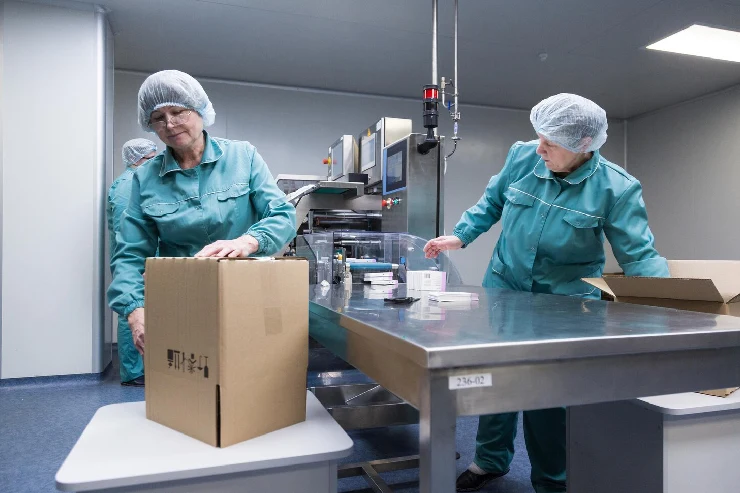
- Bulk production – Once approved, the formula moves to scaled manufacturing under controlled hygiene and quality conditions.
- Filling, packaging, and dispatch – The finished product is filled into approved packaging, labelled, quality-checked, and shipped to the brand or distribution point.
Passive process control is embedded throughout this workflow — batches are continuously monitored, and each stage is documented before the next is authorised, which reduces the chance of defects reaching the final product. This end-to-end structure is what a genuine custom sunscreen manufacturer should be able to walk a brand through in detail, rather than treating production as a black box.
OEM vs Third-Party Manufacturing: Which Is Better for Your Brand?
Brands often confuse OEM (Original Equipment Manufacturer) and third-party manufacturing, but the two models serve different needs. Understanding the distinction helps a brand choose the right structure for its growth stage.
| Aspect | OEM Manufacturing | Third-Party Manufacturing |
|---|---|---|
| Formula Ownership | Manufacturer’s existing formula, lightly adapted | Fully customised to brand’s specifications |
| Flexibility | Limited changes to base formula | High flexibility across actives, texture, and packaging |
| Time to Market | Generally faster | Slightly longer due to custom R&D |
| Investment Level | Lower upfront cost | Moderate, but scalable |
| Best Suited For | Brands wanting quick, ready-made launches | Brands wanting a distinct, differentiated product |
| Long-Term Branding | Harder to build a unique identity | Easier to build proprietary formulations |
For a brand that wants to launch quickly with a proven formula, OEM can work well. However, for a brand aiming to build long-term equity around a unique sun care line, private label sunscreen manufacturer partnerships under a true third-party model tend to offer more control over formulation, packaging, and positioning. This is also where sunscreen product development becomes a genuine collaboration rather than a template selection.
Why Choose Jack Cosmetics for Third-Party Sun Care Manufacturing?
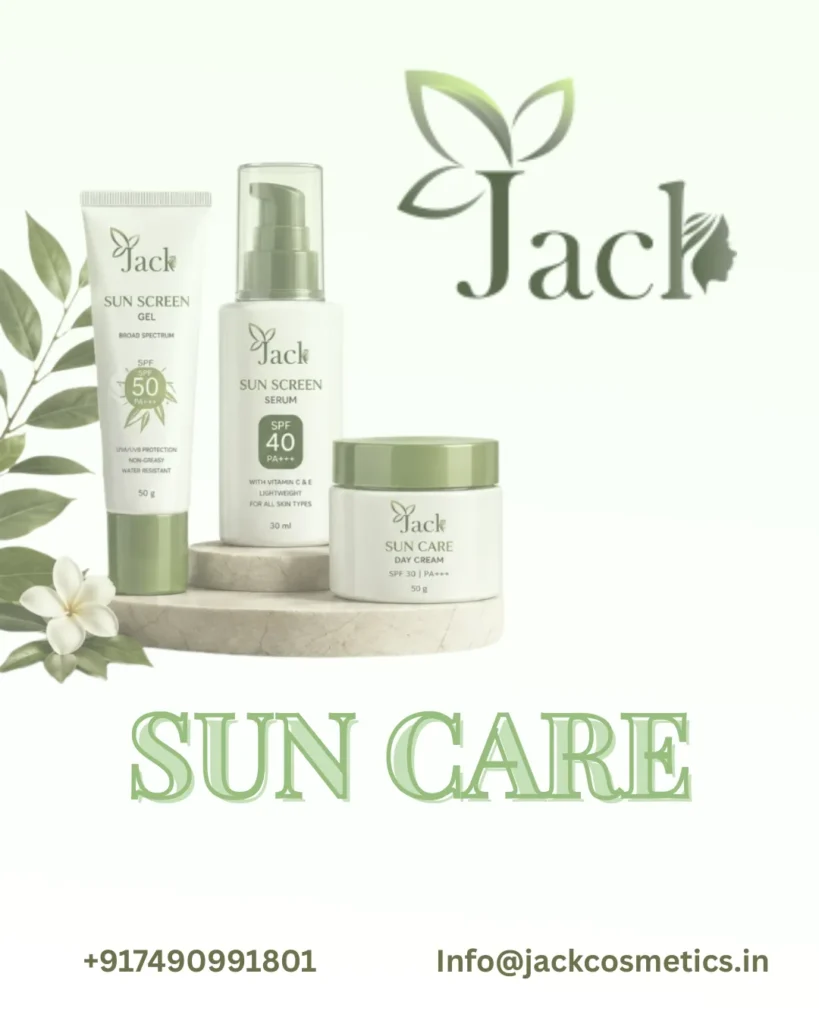
Jack Cosmetic Pvt. Ltd., established in 2018, has positioned itself as a dependable partner for brands seeking sunscreen third party manufacturers in India. The company has delivered custom cosmetic manufacturing solutions to over 200 brands, maintaining a 98% client satisfaction rate along with strong repeat business — figures that reflect consistency rather than a one-time engagement model.
A few reasons brands continue to work with Jack Cosmetic Pvt Ltd. for sun care production:
- A state-of-the-art manufacturing facility built to handle SPF-specific formulation requirements.
- Custom formulation support rather than fixed, off-the-shelf templates.
- Low MOQ options, making it accessible for both emerging and established brands.
- Scalable production capacity as brand demand grows.
- Strict quality control procedures applied across every batch.
- On-time delivery commitments and pan-India supply capability.
- Full regulatory support to help brands navigate labelling and compliance requirements.
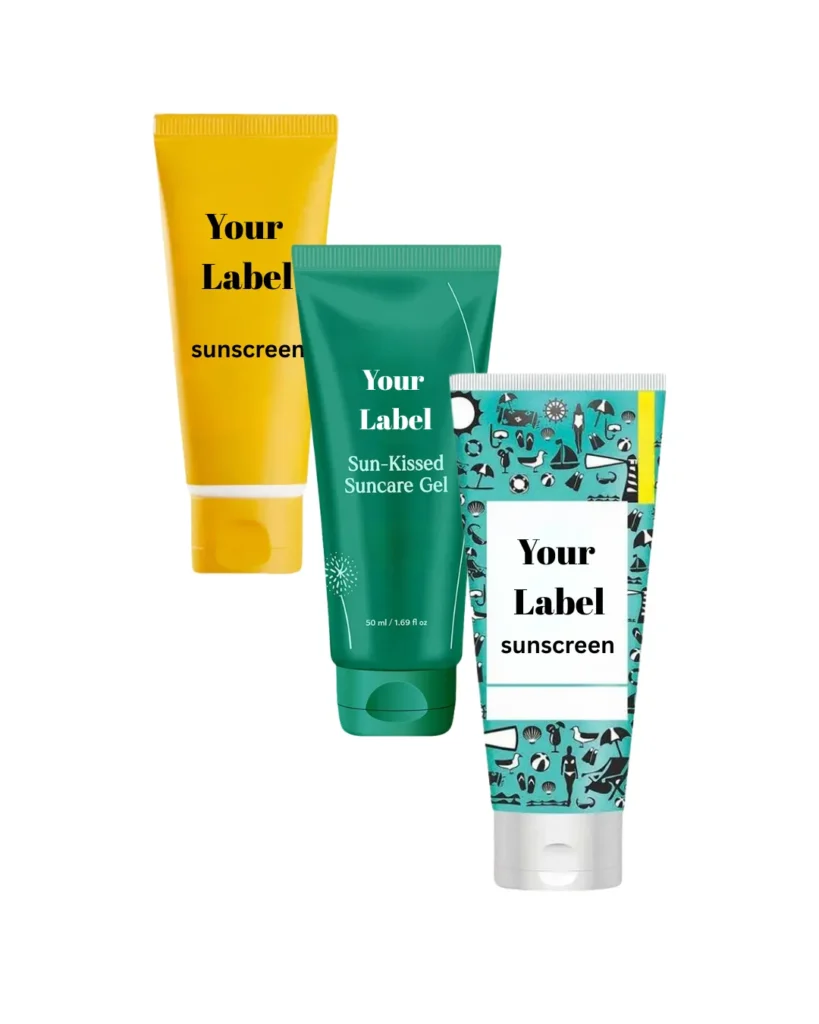
This combination of formulation expertise and operational discipline is what allows the company to support brands from their first small batch through to nationwide scale-up, without the brand needing to manage manufacturing complexity in-house.
Why Jack Cosmetics Is a Trusted Third-Party Cosmetics Manufacturer in Gujarat
Located at Survey no.324 paiki Plot no. 10/A, Near Paradise Industrial Park, Village – Chachrawadi Vasna, Sarkhej Bavla Road, Ta. Sanand, Dist. Ahmedabad, Gujarat – 382213, India, Jack Cosmetic Pvt Ltd. operates from one of the country’s established manufacturing corridors, giving it strong logistics access for pan-India distribution.
The company holds ISO and GMP certification, along with FDA approval where applicable and AYUSH certification for Ayurvedic product lines. It is also recognised for being Cruelty-Free, Eco-Friendly, and aligned with the Make in India initiative — credentials that matter increasingly to both regulators and end consumers who scrutinise sourcing and manufacturing ethics.
Beyond sun care, Jack Cosmetic Pvt Ltd. extends its expertise across Sun Care, Skin Care, and Personal Care categories, functioning as a broader third party cosmetic manufacturer for brands that want a single, dependable production partner rather than juggling multiple vendors. This breadth is particularly useful for brands planning to expand from a single SPF product into a full sun care or skincare range under one roof.
Brands can reach the team directly at +917490991801 or Info@jackcosmetics.in to discuss formulation requirements, MOQ options, or facility details.
Conclusion: Building a Successful Sun Care Brand
Understanding how sunscreen third party manufacturing works removes much of the uncertainty that keeps founders hesitant about entering the category. From selecting a reliable manufacturer and understanding available product formats, to following the formulation-to-dispatch process and weighing OEM against a fully custom third-party model, each decision shapes how the final product performs on shelf and in the eyes of consumers.
A manufacturing partner with certified facilities, transparent testing, and genuine formulation flexibility — such as Jack Cosmetic Pvt Ltd. in Gujarat — can turn this process from a technical hurdle into a manageable, well-documented path toward a compliant, market-ready sun care line. For brands exploring how to start sun care manufacturing, the most reliable route is to partner early with a manufacturer that can guide formulation, testing, and compliance from day one, rather than treating these as separate, disconnected steps.
Sunscreen regulation continues to evolve globally; the U.S. FDA’s sunscreen guidance outlines how active ingredients and SPF testing are evaluated in the United States, while in India, the Bureau of Indian Standards’ draft sunscreen specification sets out sampling and testing requirements for sunscreen cosmetics sold domestically. Staying aligned with such frameworks, through a manufacturer that already understands them, is one of the simplest ways a brand can protect both its customers and its reputation.
FAQs
Q1.What is sunscreen third party manufacturing?
- It is a business arrangement where a brand outsources formulation, testing, and production of its sunscreen products to a specialised manufacturer, allowing the brand to focus on marketing and distribution while the manufacturer handles technical production.
Q2.How is third-party manufacturing different from OEM?
- Third-party manufacturing typically allows full formula customisation for the brand, while OEM relies on the manufacturer’s existing base formula with only minor adjustments.
Q3.What is the minimum order quantity for private label sunscreen manufacturing?
- This varies by manufacturer, but many facilities, including low MOQ sunscreen manufacturers in India, offer smaller starting batches so new brands can test the market before scaling up.
Q4.How long does sunscreen product development usually take?
- Depending on formulation complexity and testing requirements, development can take anywhere from a few weeks for simpler formulas to a couple of months for highly customised, actives-rich products.
Q5.Do third-party sunscreen manufacturers handle regulatory compliance?
- A reliable manufacturer typically assists with documentation, labelling guidance, and testing coordination, though the brand remains responsible for final regulatory filings under its own name.
Q6.Can a manufacturer produce both sunscreen and general skincare products?
- Yes, many facilities that serve as sun care manufacturers also operate as broader skincare manufacturers in India, allowing brands to consolidate their entire personal care range under one manufacturing partner.
Q7.What certifications should a sun care manufacturer have?
- Look for ISO and GMP certification at minimum, with FDA approval where applicable and AYUSH certification if the brand plans to launch Ayurvedic or herbal sun care formulations.
Get Quote